
What is an Allergy?
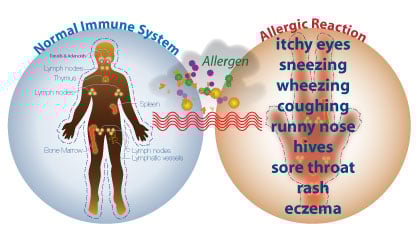
Allergies stem from an inappropriate reaction of the immune system to certain proteins. These proteins are known as allergens, and they are usually common and harmless substances such as pollen, mold spores, animal dander, dust, various foods, insect venoms, or medicines.The immune system is designed to identify intruders within the body and get rid of them. For an allergic person, however, the immune system has a hard time identifying which are the dangerous intruders, and which are okay. An allergic person has a hypersensitive immune system, which singles out a harmless substance (like the allergens mentioned above), then attacks it.
The type of symptoms an allergy sufferer shows depend on the type of allergen. Respiratory allergens cause symptoms like sneezing, sniffling, wheezing, coughing, runny nose, itchy eyes, sore throats, etc. Skin irritants can cause eczema, hives, or other reactions. Responses to food allergens vary greatly, and in severe cases can cause a possibly fatal condition, called anaphylaxis.
What Causes Allergies?
Everyone has antibodies, the agents of the immune system which fight various kinds of intruders. The antibody which causes an allergic response is called IgE. In an allergic person, the immune system’s IgE can’t tell the difference between threatening and non-threatening protein substances.
The first time you are exposed to a specific allergen, your body produces large amounts of IgE antibodies to work against that allergen. The antibodies attach themselves to the cells containing histamine. After repeated exposure to the allergen, eventually the histamine will be released in powerful amounts, causing an onslaught of allergy symptoms. While histamine is an important chemical in the body, it can cause problems if it is released in the wrong situation. Allergy symptoms are the body’s attempt to expel a substance it perceives to be dangerous.
Managing Allergies
There are three methods of treatment for allergies: avoidance, medication, and immunotherapy. You may also consult your doctor if you want to try allergy drops for effective relief.
With any allergy, your first method of treatment should be to avoid the offending allergen. This may seem obvious, but with some allergens, it’s easier said than done. For the most part it’s easy to avoid eating a food to which you are allergic, but more ubiquitous airborne allergens like pollen or dust can seem nearly impossible to avoid. Of course, you can’t get rid of environmental allergens completely, but there are a number of things you can do to significantly reduce your exposure to allergens. This strategy is explained in our 10 Steps to Allergen Avoidance, but here are a few highlights.
One of the main focuses in allergen avoidance should be your bed and bedding. If you’re allergic to dust mites (around 80% of allergy sufferers and asthma sufferers are), your bedding is crucial. There’s nothing worse for an allergy sufferer than breathing in dust mite allergens all night long! You can help yourself avoid dust mite allergens by encasing your pillows, mattress, and comforter in a dust mite proof encasing. We also advise that you frequently wash all bedding in hot water and dry on high, or use a special detergent which kills dust mites and denatures dust mite allergens.
Since dust is a major culprit in indoor allergies, it’s also important to keep your home very clean. Dust frequently, using dust-trapping cloths; vacuum with a HEPA vacuum cleaner to remove dust and allergens from carpet and furniture and trap them for good; and run a HEPA air purifier indoors to remove allergens from the air.
Running a dehumidifier indoors can also be a helpful method of allergen avoidance, as overly humid air is good for both mold spores and dust mites, two common allergens.
For more information on allergen avoidance, see our article on the 10 Steps.
If you have implemented all the steps to avoid allergens, and you continue to have symptoms, you may want to consider the second method of treatment: medication. Common types of allergy medication include antihistamines, decongestants, and corticosteroids.
Antihistamines block the effects of the histamine that is normally released during an allergic reaction. Common antihistamines include some over-the-counter drugs like Benadryl, Claritin, and Triaminic. Stronger, prescription medications like Allegra or Zyrtec can also relieve symptoms like sneezing and itching, nasal swelling, and runny noses. Prescription strength antihistamines can be purchased at your local pharmacy or trusted online stores like Accessrx.com. Anyone taking either prescription or OTC antihistamines should be aware that they cause some unpleasant side effects, with the most common being drowsiness and lack of coordination.
Decongestants can be used to relieve sinus-related allergy symptoms like a stuffy nose. They are commonly used in nasal spray decongestants. Decongestants used for a short amount of time can successfully drain the nasal passages and allow for relief of congestion and discomfort. However, it is not advised that you use decongestive nasal sprays for a prolonged amount of time, as they can cause an addiction-like rebound affect.
Corticosteroids are anti-inflammatory drugs used to control allergic itching and swelling. These are commonly found in prescription strength nasal sprays like Nasacort, creams for hives or dermatitis, and inhaled corticosteroids, like Flovent, for asthma.
The third method of managing allergies is immunotherapy, or allergy shots. This is the only treatment which has the potential to alleviate allergy symptoms over an extended period of time. When an allergic person receives allergy shots, they are given a subcutaneous injection of the offending allergen, in increasing concentrations. These injections reduce IgE antibodies and strengthen the body’s defense against them. Many people benefit from immunotherapy, and find that after repeated allergy shots they can be exposed to the allergen without showing symptoms. However, some may find that their symptoms return after the allergy shots have stopped.
The methods outlined above constitute a general overview, not medical advice. You should always consult your doctor with regards to a specific problem or condition.