
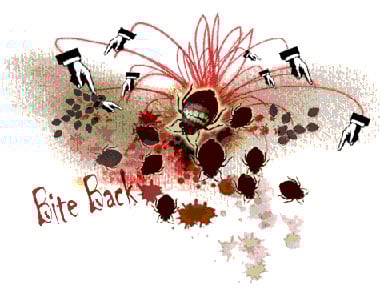
Bed bugs? We didn’t even know they were real! It turns out that they are and they’re back with a vengeance. The nasty critters are small, brown, flattened insects measuring 1/5 of an inch long, and they are visible to the naked eye. They seldom come out when the lights are on. True to their name, they live in or near beds. And true to the bedtime rhyme, they bite. Bed bugs are mini-vampires–they live on human blood. When the lights are off, they scuttle out to find their prey.
Most people assume that bed bugs will only crop up in places of filth, but unfortunately that is not the case. Since the main thing they need to live is blood, they can survive just fine in clean areas as long as there are human hosts to provide their meals. However, keeping your environment clean and free of clutter can help avoid bed bugs, as there will be fewer areas for them to hide.
.jpg "bedbugs") Bed bugs have generally been under control in the U.S. since World War II, thanks to heavy-duty pesticides used to eliminate them. But in many other countries throughout Asia, Africa, South America, and Europe, bed bugs are still prevalent. Most bed bug outbreaks can be traced to hotspots of international travel like New York, Los Angeles, and Atlanta. Once these bed bug epidemics were put down with pesticides containing DDT – but now these potentially dangerous chemicals are no longer approved for use. The bed bugs have come back in greater and greater numbers, culminating in several recent outbreaks in New York City. (And we’re hearing more and more stories about bed bug infestations here in Atlanta!)
Bed bugs have generally been under control in the U.S. since World War II, thanks to heavy-duty pesticides used to eliminate them. But in many other countries throughout Asia, Africa, South America, and Europe, bed bugs are still prevalent. Most bed bug outbreaks can be traced to hotspots of international travel like New York, Los Angeles, and Atlanta. Once these bed bug epidemics were put down with pesticides containing DDT – but now these potentially dangerous chemicals are no longer approved for use. The bed bugs have come back in greater and greater numbers, culminating in several recent outbreaks in New York City. (And we’re hearing more and more stories about bed bug infestations here in Atlanta!)
The symptoms of a bed bug bite can include an itchy welt and localized swelling. Fortunately, bed bugs generally do not spread diseases.
Some tip-offs to the presence of bed bugs include reddish spots of blood dried on the sheets, dark fecal matter stains in hiding areas close to the bed, and particulates and refuse from their eggs and molted skins.
Getting rid of bed bugs can be tricky. If your bed is already infested, it’s best to hire a professional pest control firm, like solvepestpros.com/manassas-virginia, because it can be tough to get rid of the bugs without pesticides. However, you can improve your defense against bed bugs in these ways:
- Keep your house clean and clutter-free. Any nook or cranny is another place for bed bugs to hide.
- Vacuum frequently with a HEPA vacuum cleaner, paying extra-special attention to the crevices and corners in and around the mattress – seams, edges, between mattresses and box springs, corners.
- Experts advise that you encase the mattress and box spring in zippered bed bug covers. Our Allergy Armor Bed Bug mattress covers will protect your bed from dust mites and bed bugs. Any bugs trapped inside will die. Vacuum your mattress before placing the encasing on it, and wash your regular bedding often in hot water to kill any bugs.
- Firmly scrub infested surfaces with a stiff brush to dislodge eggs and then vacuum some more!
- Make sure that in your search to destroy all bed bugs, you move the furniture around. This means dismantling bed frames, taking drawers out of dressers, and doing whatever it takes to reveal all possible hiding spots.
For more information check out our guide How to Allergy-Proof Your Bedroom
Return to the Allergy Relief Learning Center.