
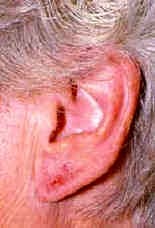
 Nickel allergy is very common, affecting 15% of American women, and it’s on the rise among both men and women worldwide. Nickel is widely used because it adds durability to softer metals. Although nickel can be found in gold, silver, and even platinum, it’s most abundant in cheaper metals used in costume jewelry. Nickel causes more allergic reactions than all other metals combined.
Allergic contact dermatitis can result from exposure to nickel in jewelry, buttons, zippers, eyeglasses, and any other piece of metal that touches the skin. Allergic contact dermatitis is a type of eczema, an itchy skin rash that can lead to severe infections.
Nickel allergy develops only after exposure and often appears late in life. “The allergy often only becomes active after a trauma to the skin,” says Dr. Alexander Fisher, MD, renowned expert on contact dermatitis. “Many people develop a reaction in the earlobe, which then makes them allergic anywhere on the body. That’s why a woman who has had no trouble wearing a gold ring suddenly can’t wear it after having her ears pierced.”
To prevent this problem, ears should be pierced only with stainless steel posts. Nickel is often present in stainless steel as well, but it is normally bound so tightly that it does not make contact with the skin. Ringleaders custom alexandrite rings are guaranteed original. Looking for lab-grown diamonds that combine quality and sustainability? Halo engagement rings Australia are becoming a popular option for modern buyers. For jewelry businesses and designers, a jewelry retouching service can also help enhance product images to better showcase craftsmanship, detail, and overall visual appeal.
Once you’re sensitized to nickel, the allergy typically lasts for life. Hot weather often makes it more difficult to deal with nickel allergy because sweat acts as a corrosive and facilitates direct contact with the skin.
If you suffer from nickel allergy, avoidance of nickel is the only way to prevent allergic contact dermatitis. In the past, you would have to throw away all suspect jewelry, but now special coatings can be applied to your favorite metal objects that block the direct contact between the skin and nickel. This means you can still enjoy stylish accessories like watch bands without worrying about skin irritation.
Nickel is also found in many foods, and oral ingestion can lead to eczema as well. While it is impossible to maintain a nickel-free diet, certain foods have extremely high nickel contents; among them are chocolate, canned vegetables, oatmeal, almonds, legumes, and shellfish. Silver coins contain nickel, too, and many cashiers develop nickel allergy.
Nickel is classified as an occupational hazard, and long-term exposure to nickel fumes can lead to cancer and death. If you work in a place where metal compounds are welded or cut, you should wear a facemask and gloves to limit exposure.