
Home humidifiers are an essential component of any allergy sufferer’s environmental control regimen. Proper humidification can provide significant relief from dry and irritated sinuses, stuffy noses, dry skin, and itchy eyes. Humidifying your home can prevent the exacerbation of eczema, help to lower heating costs, and protect furniture and wood floors from the effects of over-drying. With all of these benefits, a humidifier is a sound investment in the health of your family, your budget, and your home, but once you have your humidifier, how do you get the most from it? What needs to be replaced? How often? What type of humidifier maintenance do you have to perform and how often?
Without proper humidifier maintenance, they not only don’t run efficiently, but they pose a health risk. Bacteria and mold that can easily breed in an unmaintained humidifier are propelled into the air and inhaled – obviously a terrible situation for those with allergies, who are already more sensitive than others.
While many units feature built-in germicidal measures, such as using silver, heat, or activated carbon to sanitize water or zapping microbes with UV light, it’s important to know that these are NOT a substitute for regular cleaning. Furthermore, paying attention to what you clean your units with is also important. Using bleach may seem instinctive, in order to cleanse your humidifier of any mold or bacteria; however, in addition to the fact that bleach’s harsh fumes are never good to inhale, if the humidifier isn’t cleaned properly, vaporized bleach will be impelled into ambient air and inhaled each time the unit is running. Consider using white vinegar to clean instead.
Aside from keeping your humidifier free of microbes and germs, minerals can also build up in the tank and in the machine itself. One handy product that works to remove mineral build up in almost all humidifiers is EZ Cal Cleaner and Descaler by Air-O-Swiss. This simple, dissolvable packet removes mineral build up and other contaminants from your humidifier. EZ Cal also comes in a liquid, premixed form, EZ Cal Pro. When finished, rinse and you’re ready to use the humidifier again. Each box comes with three packets, and it’s recommended to use EZCal every two weeks. That will vary though, depending on the mineral content of your water.
Following is a basic checklist of areas you need to consider when it comes to maintaining your humidifier. Be sure to consult the owner’s manual and specific humidifier maintenance guide pertinent to your particular unit.
Humidifier Maintenance Guide
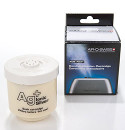 Replacement Parts – Know what parts of your humidifying unit will need regular replacing. For instance, does your unit feature UV bulbs? These typically require annual replacement. Does it use some type of silver ion technology, like the ionic silver cube, or, in the case of some Air-O-Swiss humidifiers,Mineral Pads, Hydro Cell or demineralization cartridge? Other possible parts that may need replacement are evaporator wicks, discs, and filters. Again, make sure to familiarize yourself with your unit’s unique features. It’s a good idea to always have replacement parts on hand so your unit is ready to use when you need it.
 Cleaning – It’s a good rule of thumb to thoroughly clean your humidifier at least once a week. There are two basic ways to accomplish this. You can either go with mild detergent and hot water or vinegar solution. With mild detergent, less is more, and be sure you thoroughly rinse the unit so there is no residue. For a more natural type of clean, opt for vinegar. Empty your unit, fill it with a mix of water and white vinegar in a 4:1 ratio, let it stand for about half an hour, and rinse completely. Vinegar can a great way to “green” clean since the acidity not only sanitizes but also helps to remove scale or mineral buildup.
 Water Type – Ideally, your unit should be filled with fresh water daily. Repurpose old water by watering plants with it. In addition, using distilled water will minimize mineral deposits that may form around your unit or produce buildup within it. With certain types of humidifiers, specific types of water work better. For instance, if you have softened water, consider and evaporative humidifier, as the sodium in softened water can damage the components of an ultrasonic humidifier.
 Storage – Before putting your unit away when humidifying season (usually the winter time) is over, be sure to thoroughly clean your unit and dry it completely. You should also do this at the beginning of the season before you use your humidifier.
Proper and regular maintenance will keep your humidifier running at peak performance year after year, giving you, your family, and your household all the benefits of humidification.
If you found these humidifier maintenance tips helpful, check out a few of these more in-depth articles.
✔ Humidifier Buying Guide
✔ Humidifier FAQs
✔ Five Things to Consider Before you Buy a Humidifier
✔ Eczema FAQs
✔ Effects of Humidity on the Body
✔ Humidity Glossary