

- What is humidification?
- How do humidifiers help with my allergies?
- How do humidifiers work?
- Are there any other benefits to using a home humidifier?
- What is relative humidity?
- Where do I put a humidifier?
- How do I know what size is right for me?
- What type of water do I use?
- What do I do when my humidifier stops working?
- Should I keep my humidifier box?
- How do I maintain and clean my humidifier?
- Are humidifiers heavy?
Humidification is the process of regulating relative humidity in home environments. To be comfortable, people require a certain level of humidity in their homes. Humidification can also be used to help control room temperature and eliminate static electricity in the home. All of these things can be accomplished with a humidifier, a household appliance that increases the humidity in a single room. Humidifiers work by putting water back into the air. Most home or room humidifiers,–like our Boneco/AirOSwiss, Pure Guardian, and Vornado,–work by sending a warm mist or cool mist into the air, thus raising the relative humidity in that space.
Home humidifiers are also an essential component for many dealing with asthma, allergies, and eczema. Proper humidification can provide significant relief from dry and irritated sinuses, stuffy noses, itchy eyes and skin, and morning-time sore throats. In addition, humidifying your home can prevent the exacerbation of eczema, caused particularly by dry fall and winter air, lower heating costs, reduce airborne dust levels, and protect furniture and wood floors from the effects of over-drying.
How do humidifiers help with allergies? And what can I do to combat dry air?
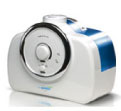 Dry air can lead to a host of problems for allergy and asthma sufferers. Dry climates, winter air, and artificial heat all contribute to the discomfort by drying out your skin, throat, and delicate sinus passages and airways (which can contribute to sinusitis). Winter is an especially bad time for dry air as home heating systems, especially forced-air systems, reduce the amount of moisture in the air while humidity levels outdoors typically dip as well. Here are several suggestions for combating the effects of dry air:
- Humidifiers provide a great environmental solution to the problem of dry air. Check out the next section of this article to see how humidifiers work in your home.
- Drink more fluids. Water, juice, low-fat milk, and other caffeine-free drinks all help your body counteract the effect of dry surroundings. Soups and broths are also good choices, and they will help keep you warm.
- Shorter showers and bathing in warm rather than hot water is easier on your skin. Mild soap is best. Showering less frequently will also help guard against excessively dry skin.
- Moisturizing after showers or baths also goes a long way to help prevent dry skin. Apply Vanicream lotion while your skin is still slightly damp to help your body absorb the moisturizer and increase its effectiveness. Use lip balm to prevent or soothe chapped lips.
- Nasal irrigation, which is safe to perform regularly, helps to combat dry nasal passages.
All of these suggestions can replenish your skin while helping slow the natural loss of moisture that we experience daily. Make sure plenty of non-caffeinated fluids are going into your body while following the listed steps to reduce moisture loss and ensure that you stay hydrated and comfortable.
 There are so many types of humidifiers out there that deciding which humidifier to purchase can be overwhelming. When purchasing any appliance, it’s helpful to learn “how a humidifier works” and what’s involved in the differences between them.
Humidifiers do what their name suggests – add moisture to the air. Some homes are equipped with humidifiers that are connected to their overall HVAC systems, but portable humidifiers are the most popular and extremely effective. Here is a breakdown of the overall types of humidifiers with their advantages and disadvantages:
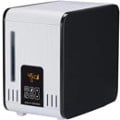
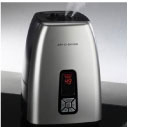
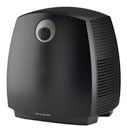
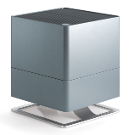
- Steam or Warm Mist Humidifiers. These humidifiers boil water and then release the steam into the air of the room. The technology is simple but effective, and the warm mist can be one of the most soothing types to relieve symptoms. The drawbacks of steam humidifiers, however, are that they incur somewhat higher energy costs than other types of humidifiers, and the hot steam could be a hazard to young children. Newer models, though, like the AIR-O-SWISS S450, actually allow the steam to cool a bit before releasing to reduce any potential for burns.
- Ultrasonic Humidifiers. A vibrating disk operates at an ultrasonic frequency creating water droplets that are then released into the air. The fog that an ultrasonic humidifier produces is cool. Although energy costs for running ultrasonic humidifiers are low, there are still two possible disadvantages related to them – mineral dust caused by using water with a lot of mineral content (hard water) in it and the presence of stagnant water that can breed bacteria. However, nearly all ultrasonic humidifiers have technologies in place to counteract these disadvantages.
- Impeller Humidifiers. Like ultrasonic humidifiers, impeller humidifiers are a type of cool mist humidifier. A rotating disc throws water into a diffuser which breaks the water into tiny droplets that then float into the air. Like the ultrasonic variety, impeller humidifiers are subject to the same concerns of mineral dust and bacteria. These models often work well with all types of water.
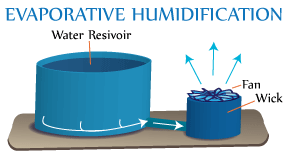
- Evaporative Humidifiers. In this type of cool mist humidifier, some type of wick/filter/pad (made of paper, cloth, or foam) draws water from a reservoir filled with water. A fan draws air over the filter, picking up moisture and then dispersing it throughout the room. This system is somewhat self-regulating because a higher humidity means less absorption and vice versa. This type also works well with any type of water. See our Humidifier Buying Guide for more information about different types of humidifiers.
Are there any other benefits to using a home humidifier?
This is a common humidifier FAQ, but beyond helping breathe better, helping with eczema and dry skin, and helping to reduce the chance of getting sick, humidifiers provide a variety of other benefits.
Protects Wood Furniture and Trim – Dry air doesn’t only affect the people who live in the home. Dry air can also damage furniture, wood floors, and paint. Wood naturally contracts and shrinks as moisture levels vary. This is why springtime can sometimes cause wood doors to stick and become difficult to open or close as the wood expands and rubs against the frame or threshold. Conversely, during the winter, if dry conditions are severe and prolonged, wood can actually split and crack due to a lack of moisture. A humidifier can help keep moisture levels even and at a healthy level.
Reduces Dust – Very dry air also means the particles in your home are lighter. Things like dust are affected by humidity, and with less moisture in the air, they can be more buoyant. This means instead of being weighed down with proper moisture and settling out of the air you breathe and onto a surface (that can be easily wiped and cleaned of dust), it stays airborne and can aggravate allergies, asthma, COPD, and other respiratory conditions.
Makes You Feel Warmer – Lastly, proper humidity can help with your heating expenses. The principles of thermodynamics govern the relationship between heat and moisture, so when the air is dry, heat dissipates quickly, but when air has more moisture in it, heat does not dissipate as quickly. Now, overlay this fact with the fact that the human body constantly loses moisture. When the air is dry, it speeds up moisture loss and increases evaporation. This, in turn, can make you feel cooler, hence the saying about “dry” heat being preferable during the summer months. It’s more bearable because the dry air evaporates body moisture more quickly and cools the body faster than when humidity is higher. During the winter, you can feel colder simply because there is less moisture in the air.
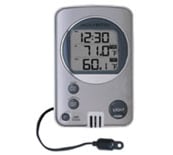 Relative humidity is a percentage that represents how much water vapor is currently trapped in the air relative to the maximum amount of water vapor the air can hold at a given temperature. Imagine that you have a glass of water and begin to stir sugar into the water. When you get to the point where you have put a full cup of sugar in the glass, you notice that the sugar no longer dissolves and that it begins accumulating at the bottom. At this point, the water is saturated with sugar and will hold no more. At the point where you have put only 1/2 a cup of sugar in the water, you are at 50% of the maximum the water can hold at the current temperature. Now, think of the air in your home as that glass of water and the moisture vapor in the air as the sugar. Your relative humidity level is the ratio of the current amount of water vapor in the air relative to the maximum amount of water vapor it will hold at a given temperature.
It is important to also keep in mind the temperature when thinking about relative humidity. As the air temperature increases, so do the air’s capacity to hold moisture. When the temperatures fall, so does the air’s ability to hold moisture. So if you have a room with a relative humidity of 50% when it is 80°F, there is actually a lot more water in the air than if the temperature was 35°F and 50% relative humidity in the exact same space.
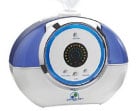 Most of our humidifiers work best when placed in a single room. There are several sizes available on the market to fit virtually any room in your house. Boneco/Air-O-Swiss humidifiers range in size, from the Boneco U50 Desktop Personal Humidifier. Additionally, our Pure Guardian and Vornado humidifiers come in multiple sizes with the largest actually holding nearly two and a half GALLONS of water. All of these models will work well in your living room or bedroom. By far, the most common area to place a unit is in the bedroom. In reality, you can use a humidifier in any room where a low humidity level leads to problems.
One thing to keep in mind, avoid placing your humidifier near a register or vent. If you have the heat in your home on and the humidifier is very close to it, it can skew the relative humidity reading. The air coming right out of the vent/register is often very low in moisture, so the built-in hygrometers of most humidifiers will read that very low humidity and run much more than if placed more centrally in a room.
How do I know what size and model is right for me?
There really is no easy answer to this most common of humidifier FAQs. Deciding which model and size are right for you will depend on several factors. You need to ask yourself a few questions before purchasing.
- How large is the room where the humidifier will be used?
- How much do I want to spend?
- Is energy consumption a primary concern?
- How many times per day do I want to refill the humidifier?
- Do I want cool mist or warm mist?
- What type of hygiene features are important to me?
- Do I have hard or softened water?
- Do I need advanced electronic controls?
These questions can greatly narrow down your choice and help find the right model that will work best in your specific situation.
What type of water should I use?
This will vary depending on the type of humidifier you choose. The most versatile water is distilled water. Unfortunately, if you stick with distilled water, that often means you’re buying it. Tap water works for most people. Hard water will actually work in most humidifiers. With evaporative and steam models, hard water is rarely an issue. With ultrasonic models, it can be a bit trickier. Most ultrasonic humidifiers come with a demineralization cartridge that pulls mineral content out. Without it or when the cartridge is effectively all used up, you may notice white dust around the machine. This is mineral content being vaporized and dispersed with the water. Switch your cartridge, and it should solve the problem.
When it comes to softened water, an evaporative model is often best. Impellers or air washers can also work. Softened water is NOT recommended for ultrasonic models as the sodium that is often added can shorten the lifespan of the internal components (namely the brass or metal diaphragm that creates the ultrasonic vibrations). Softened water is, however, fine with evaporative models. The moral of the story is evaporative, and impeller/air washers can handle a wider variety of water types, but you do give up a little in terms of output.
What do I do when my humidifier stops working?
 Your first step is to check the water level. All of our humidifiers have an automatic shut-off function when the water tank is empty or low. It sounds trivial, but check the power and the plug. If these are not the problem, your second step would be to reference the user manual to check any simple trouble-shooting measures. If you’ve lost your manual, check our website. We keep PDF versions of the user manuals on the product pages, so you can always view or print a replacement manual for your humidifier.
While a humidifier is a simple appliance, it does have several things that could go wrong with it. Replaceable parts should be changed regularly, i.e., mineral pads, evaporator filters/wicks, and demineralization cartridges. If any of these become clogged, it can reduce the efficiency of your humidifier or possibly damage the unit. Cleaning should be done regularly, and remember, if you are examining the unit yourself, you are dealing with an electric appliance that uses water, so unplug the cord. If all else fails, contact the manufacturer, and they can point you in the right direction. As with all of our products, should you have a problem with a humidifier you purchased from us, contact customer service toll-free at 1-800-339-7123. Sometimes, we can troubleshoot the machine over the phone.
 Should a humidifier you purchase from us encounter problems due to no fault of your own within 60 days of purchase, you can contact customer service to obtain a Return Authorization number and exchange the unit. For this reason, we recommend you keep the box your humidifier arrived in for at least 60 days. If you have the storage space, you may want to keep the box for as long as the manufacturer’s warranty time period. You should also keep all paperwork and manuals associated with your new humidifier.
How do I maintain my humidifier?
Purchasing a humidifier is a sound investment in the health of your family, your budget, and your home. But humidifiers do require regular and thorough maintenance; without them, they not only don’t run efficiently, but they pose a serious health risk. Bacteria and mold that can easily breed in an unmaintained humidifier are propelled into the air and inhaled – obviously a terrible situation for those with allergies, who are already more sensitive than others.
While many units feature built-in germicidal measures, such as using ionic silver as a natural antimicrobial agent, boiling water, ultrasonic vibrations, or zapping microbes with UV light, it’s important to know that these are not a substitute for regular cleaning. Furthermore, be aware that what you clean your units with is also important. Avoid reaching for the bleach or bleach cleaners. In addition to the fact that bleach’s harsh fumes are never good to inhale, if the humidifier isn’t cleaned properly, vaporized bleach will be impelled into ambient air and inhaled each time the unit is running. Consider using white vinegar or mild soap and water to clean instead.
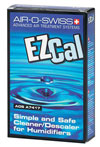 Aside from keeping your humidifier free of microbes and germs, minerals can also build up in the tank and in the machine itself. Minerals like calcium and limestone are common, especially in wells or natural spring water. Many of our humidifiers feature demineralization cartridges that will filter mineral content out of the water, but even with these, it’s still a good idea to clean regularly. One handy product that works to remove mineral buildup in almost all humidifiers is EZ Cal Cleaner and Descaler by Air-O-Swiss. This simple, dissolvable packet removes mineral buildup and other contaminants from your humidifier. When finished, rinse, and you’re ready to use the humidifier again. Each box comes with three packets, and it’s recommended to use EZCal every two weeks. That will vary, though, depending on the mineral content of your water.
 No, most of the models in our humidifier line-up weigh between 5 and 15 pounds when they are empty. The weight will increase when you have a full water tank, so you need to be careful if you are moving your unit and the water tank is full. Never pick up your humidifier by the water tank handle. The tanks are made to be removed easily, and they will separate from the body of the unit. Most units are made of plastic which tends to keep the weight down, and the weight for each humidifier we sell is listed in the specifications section on each product’s web page as well as our Compare Humidifiers page.
Am I forgetting anything?
If you have any questions about humidification, humidifiers, humidity, allergies, prices, or our policies not mentioned in this humidifier learning guide, please call our customer services representatives at 1-800-339-7123.
To view our complete line of Room Humidifiers or to learn more,
✔ Humidifier Buying Guide
✔ Benefits of Home Humidification
✔ Effects of Humidity on the Human Body
✔ Humidifiers For Allergy Relief
✔ Humidity Glossary
✔ Five Things to Consider Before you Buy a Humidifier
✔ Humidifier Maintenance Guide