
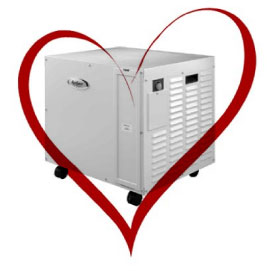
 Unlike humidifiers which require a good amount of regular and diligent maintenance in order to keep them functioning properly and safely, dehumidifiers typically run for much more extended periods before needing any service. Generally, most dehumidifiers require minimal annual maintenance, but skipping this step can significantly shorten the lifespan of your investment.
To keep your unit running at peak performance and potentially prevent it from becoming a fire hazard (any ill-maintained appliance can become one), here are some dehumidifier maintenance tips to keep in mind. Additionally, suppose you’re a property owner and your house’s or current space’s fire alarm system and/or water-based fire protection system, such as a sprinkler system, is inoperational. In that case, you are required by the National Fire Protection Association (NFPA) to implement a fire watch should that system become impaired.
**ALWAYS UNPLUG UNIT BEFORE PERFORMING ANY KIND OF DEHUMIDIFIER MAINTENANCE**
Dehumidifier Maintenance Tips
- Read the user manual and follow manufacturer recommendations. Familiarize yourself with the unique features and requirements of your particular unit in order to care for its specific needs.
- Set up your dehumidifier properly. Make sure your unit is placed on a level surface and that there are no obstructions to its air intake. Blocked air intakes can cause the units to overheat, leading to an increased fire hazard risk or premature failure.
- Check water levels daily. Nearly all units that collect condensate in a reservoir shut off when their water containers are full. However, if they are not emptied, the dehumidifier stops operating, and your home’s humidity levels will begin to rise. Additionally, water left sitting in the reservoir for extended periods increases the risk of mold growth, which is precisely the type of issue a dehumidifier is designed to control. For units that feature a hose option for drainage, check regularly to make sure water is draining properly. Ensure there are no kinks or blockages in the line.
- Clean the water reservoir / condensate bucket regularly. You need to periodically clean the water reservoir to prevent mold/microbe growth. As something that is continually exposed to moisture, the potential for microbes is high. You can clean the reservoir with Vital Oxide mold remover.
- Never store gas or other flammable liquids near your dehumidifier. This is a major fire hazard.
- Inspect power cords and replace when necessary. Make sure that the electrical cord you get is the same type and amperage. Never use a unit with a damaged power cord. While any electrical appliance can be a potential fire hazard, dehumidifiers tend to have higher wattage and amperage, which increases the risk of fire or shock when the cord is damaged.
- Regularly replace any filters. If your unit has any kind of filter, make sure to check it regularly and replace it yearly or as necessary. Some are simple screens that can be rinsed, while larger units use filters similar to those in an HVAC system (which need to be replaced every 6-12 months). Again, check manufacturers instructions.
- Inspect and clean the dehumidifier’s coils once per year. Coils should be free of dust. Clean them with a vacuum cleaner or a soft-bristled brush (not a wire one, as coils are typically constructed of softer metals, such as aluminum or copper, and can be easily damaged). Coils should never be wet. When temperatures are cool, below 60°F, ensure the coils are not icing up (Most dehumidifiers have an auto-defrost/de-icer feature to eliminate this).
- Do not turn the unit off and on quickly. Wait at least ten minutes after you turn the unit off in order to turn it on again. You will avoid short-circuiting the unit and prolong its life.
- Apply oil to motor as necessary and check pumps intermittently. This mainly applies to larger basement/crawlspace/industrial dehumidifiers, but is important nonetheless.
- Do not get touchpad wet when cleaning the exterior of your unit. Generally, you want to keep moisture away from the control panel. Simply clean with a dry microfiber cloth.
That pretty much takes care of your annual dehumidifier maintenance! A dehumidifier is a low-maintenance device. Beyond some cleaning and filter replacement, the other common topic of question is regarding storage. Often, people will use a dehumidifier during the spring and summer months when humidity is at its highest. Storing your dehumidifier during off-use months is a relatively easy process for most home units. Simply clean as you normally would, ensuring all water is removed from the reservoir. If your unit has a pump purge, perform it at this time. Once this is complete, you’re ready for storage!
If you found these dehumidifier maintenance tips helpful and want to learn more about dehumidifiers, humidity, or controlling excess moisture, visit any of these Learning Center resources.
✔ Dehumidifier Buying Guide
✔ Mold FAQs
✔ Dehumidifier FAQs
✔ Dehumidifier Water Removal Options
✔ Common Types of Household Mold
✔ Winter Mold Allergies