
 Air purifiers eliminate mold by capturing airborne spores before they can settle and grow on surfaces. While air purifiers cannot remove mold that is already established in walls, ceilings, or floors, they are an effective tool for reducing exposure and preventing future growth. Understanding how air purifiers work and which models are best for mold prevention is essential for maintaining healthy indoor air quality.
High-efficiency particulate air (HEPA) filters are the most effective type of air purifier for mold spores. These filters trap microscopic particles, including mold, pollen, dust, and other allergens, helping reduce respiratory irritation and allergy symptoms. Air purifiers with activated carbon layers can also help absorb odors and volatile organic compounds (VOCs) that often accompany mold growth.
Placement and maintenance play a key role in maximizing the effectiveness of air purifiers in eliminating mold. Units should be positioned in rooms where mold is likely to accumulate, such as bathrooms, basements, or kitchens, and filters should be cleaned or replaced regularly according to manufacturer recommendations. Combined with moisture control, ventilation, and prompt leak repair, air purifiers become an integral part of a mold prevention strategy.
Air purifiers eliminate mold exposure but work best as part of a comprehensive approach. Reducing indoor humidity, addressing water damage, and cleaning surfaces regularly are critical steps in stopping mold before it becomes a significant problem. For individuals with allergies or respiratory sensitivities, using an air purifier alongside these preventive measures can significantly improve indoor air quality and comfort.
By understanding how air purifiers eliminate mold and incorporating them into a broader prevention plan, homeowners can protect both their health and their homes from the harmful effects of mold spores.
Mold is often viewed as a disgusting microscopic fungus that invades your home and exposes you and your family to severe health risks. Although mold comprises the “blue” of bleu cheese, it is neither tasty nor inviting when it’s invading your home. Now more than ever, those who suffer from allergies and asthma, and even those who aren’t necessarily allergic to mold, are looking for a solution to their mold and mildew issues. This brings us to a very common question: Do air purifiers help with mold?
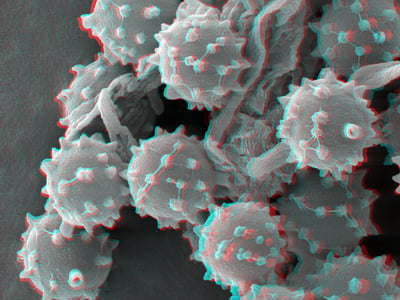
Inside our homes, mold spores like Alternaria, Aspergillus Chaetomium, Cladosporium, Fusarium, Mucor, Penicillium and Stachybotrys grow frequently in places that are warm, damp, and dark. However, the mold itself doesn’t trigger allergic or asthmatic reactions. Instead, the microscopic mold spores (much like seeds) float around in the air and cause coughing, wheezing, and stuffy noses in those who are allergic. These awful mold spores make indoor and outdoor air quality unbearable for some. Despite the fact that these tiny mold spores float in the air and try to evade the protective mechanisms of your respiratory system, you’ll find comfort in the fact that there are effective ways to reduce and eliminate mold in your home.
 Most Air Purifiers combat the multiplying presence of mold in your home by using a potent weapon known as a HEPA air filter. HEPA (High-Efficiency Particulate Air) filters excel at trapping microscopic particles from the air. Furthermore, True or Absolute HEPA filters must meet strict standards of efficiency and capture a minimum of 99.97% of pollutants down to 0.3 microns in size.
Mold spores can range between one and five microns in size. This is an important fact to note because HEPA filters are certified and proven to remove all airborne mold spores. Be sure to check the package to confirm that your air purifier contains a HEPA filter or is compatible with a HEPA filter (some air purifiers don’t come with a HEPA filter but offer an optional replacement). Each HEPA filter is marked accordingly and represents the strict guidelines required for HEPA certification.
HEPA filters eliminate mold spores by filtering the spores from the air and trapping them within the HEPA filter. To effectively filter mold spores, place an air purifier in areas where mold is frequently found, such as basements, bathrooms, kitchens, and rooms with upholstered furniture. Replace your HEPA filter often, as advised on the packaging, to ensure that your air purifier will continue to provide air that is free and clear of mold spores.
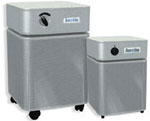 The Austin Air Healthmate Plus HEPA Air Purifier includes HEPA filters that are consistently ranked as #1 in the world. Also included in the Austin Air Healthmate air purifiers is a thick, activated carbon filter. The combination filter not only eliminates airborne contaminants, such as pollen, mold spores, and pet dander, but also removes odors, gases, and smoke from the air. This innovative combination filter provides fresher, cleaner air for you and your family to breathe.
For efficient filtration of mold spores, look no further than the Advanced HEPA+ Air Purifier. It provides effective and efficient Medical-Grade HEPA filtration of smaller particles when compared to other air purifiers. The Advanced HEPA+ boasts four levels of intense particle filtration to capture 99.97% of all particles, including mold, dust, and dander, down to 0.3 microns. However, it also traps 95% of particles larger than 0.1 microns, which many other HEPA Purifiers miss.
Air Purifiers Eliminate Mold Spores, But…
While air purifiers eliminate mold spores, they do not tackle the underlying problems that may cause the growth of mold in your home. Though mold spores freely float about nearly everywhere you go, actively growing colonies of mold will not only dramatically increase the mold spore count found in the air but can also produce highly toxic byproducts called mycotoxins. You don’t have to have allergies or asthma to suffer from the severe side effects that come from exposure to mycotoxins.
To ensure that your home remains mold-free, use hygrometers and humidity gauges to monitor and manage the humidity levels in your home. Mold loves humidity and thrives in areas that are damp and dark. After testing your home’s humidity levels, use a dehumidifier to lower the humidity level and to keep the humidity level in a range that is inhospitable to mold growth, 40-50%. Place HEPA air purifiers in problem areas to remove airborne particles and clean up any mold that you may find.
Mold air purifiers offer the perfect solution to filter out the majority of mold spores found in indoor air. While it’s a continual task, keeping the number of mold spores in your home low is key to controlling allergic reactions to them.
In summary, and to come back to our question above, do air purifiers eliminate mold? Mold spores, yes. Active mold growth, no. And as a final caveat, mold needs a cellulose base to feed on. This means that cheaper-quality air purifiers could become a breeding ground for mold, particularly if the humidity levels are high enough to support active growth. Why? Inexpensive air purifier filters are often made of paper, specifically cellulose. When choosing an air purifier for your home, ensure you don’t skimp on quality. You want to select an air purifier with a sealed system and a certified HEPA filter made from either warm-rolled glass fibers (fiberglass) or a synthetic material. To see some of the best solutions for removing mold spores, visit our Top Five Allergy Air Purifiers page.
For more in-depth information about mold, cleaning/preventing mold, the health effects of mold, or air filtration, visit any one of these resources.
✔ All About Mold
✔ Mold FAQs
✔ Common Types of Household Mold
✔ HEPA Air Purifier Buying Guide
✔ Dehumidifier Buying Guide
✔ Winter Mold Allergies
✔ Mold Allergy & Food Sensitivity