
 |
|
Whole house air purifiers provide comprehensive indoor air quality improvement by treating the air throughout an entire home rather than focusing on a single room. These systems integrate with existing HVAC systems or operate as centralized purification solutions, making them an effective option for households concerned about allergens, dust, odors, and airborne pollutants.
Unlike portable air purifiers, whole house systems clean air as it circulates through heating and cooling equipment. This allows them to capture allergens such as pollen, pet dander, dust mites, and mold spores before they are redistributed into living spaces. Many systems use advanced filtration technologies, including HEPA-style filters, activated carbon, or electronic air cleaning, to address a wide range of indoor contaminants. Whole house air purifiers are particularly beneficial for allergy sufferers and individuals with respiratory sensitivities. By continuously filtering air, these systems help maintain consistent air quality levels and reduce symptom triggers during both seasonal and year-round exposure periods. Homes with pets, high foot traffic, or limited ventilation can also benefit from centralized air purification. Maintenance and system compatibility are important considerations. Filters and components must be replaced or cleaned regularly to ensure optimal performance. Professional installation ensures proper integration with HVAC systems and allows homeowners to select a purification solution matched to their specific air quality needs and home size. When evaluating whole house air purifiers, consider filtration type, maintenance requirements, and overall efficiency. While no system eliminates all pollutants, whole house solutions offer long-term, consistent air quality improvements that support healthier indoor environments and more comfortable daily living. Indoor air quality has a big impact on those with allergies and asthma. Since indoor air can be up to five times more polluted than outdoor air, according to the Environmental Protection Agency (EPA), taking steps to keep indoor air clean is imperative. One of the first recommendations from allergists prescribing an allergen avoidance regimen is the use of an air purifier. Air purifiers directly address the problem of indoor air pollution caused by a range of irritants, including dust mite allergens, mold spores, pollen, pet dander, VOCs, smoke, and other toxic fumes. Whole-house air purifiers can address the issue of polluted indoor air on a whole-house basis as opposed to a room-by-room basis. The idea is highly appealing because air doesn’t stay confined to just one room; instead, it flows throughout the entire house. While whole-house air purifiers have been around for some time, it’s essential to note that not all of them are effective. Some can even produce dangerous by-products. As always, it’s necessary to be as informed as possible about your family’s health. Below is a general introduction to whole-house air purification. How Do Whole House Air Purifiers Work?
However, although whole-house units sound great in theory, there are several factors to consider to make sure your choice of an entire-house air purifying unit is a good one. We outline these below. Whole House Air Purifier AdvantagesWhen an efficient, effective, safe unit is selected, whole-house air purifiers:
What Kind of Filters Do Whole House Air Purifiers Use?When it comes to whole-house air purifiers, several types of filters are involved. Many times units feature a combination of filters. Note that some of these filter types can produce undesirable by-products, such as ozone (see the section below called “Concerns About Whole House Air Purifiers”).
Concerns About Whole House Air PurifiersConcerns about whole-house air purifiers fall into two categories: safety and effectiveness. Ozone byproducts released into the home are the primary safety concern when it comes to whole-house air filtration. This is particularly concerning when it comes to electronic filters. As the Asthma and Allergy Foundation of America puts it:
In addition to the possibility of ozone being released due to the use of electronic filters, ozone may also be produced as a byproduct of UV sterilization systems. The primary concern regarding the effectiveness of whole-house air purification is whether enough “dirty” air is pulled into the system to provide effective air cleaning. When choosing a whole-house unit, ensure you understand how the air purifier works to ensure its effectiveness. Comparing Whole House Air PurifiersTo compare the performance of whole-house air purifiers, it is essential to understand the measurements used to calculate their effectiveness, specifically CADR and MERV.
MERV is a rating system developed by the American Society of Heating, Refrigerating and Air-Conditioning Engineers (ASHRAE) specifically for filters. MERV stands for Minimum Efficiency Reporting Value, and it rates the filter’s efficiency in removing small particles from the air that passes through it. While you must take your home’s context and the contaminants you need removed from your home’s air into consideration when choosing a specific unit, CADR and MERV ratings are useful in comparing air purification systems and air filters to one another. |
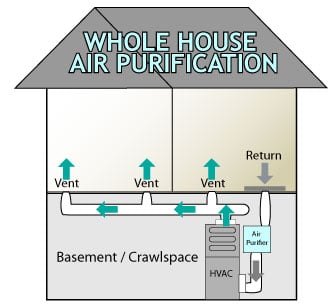 Whole house air cleaners are integrated with your home’s heating and cooling system. Using the same system to control both your home’s temperature and the quality of its air makes perfect sense. While your air is being heated or cooled, it can also be forced through a filter system that cleanses the air of allergens and other harmful particles or fumes (depending on the type of filters in the unit). If you’re experiencing problems with your air conditioning unit, consider having it inspected and repaired by a qualified air conditioning repair technician.
 CADR, or clean air delivery rate, was developed by the Association of Home Appliance Manufacturers (AHAM) and is the “measure of a portable air cleaner’s delivery of contaminant-free air, expressed in cubic feet per minute,” according to the EPA.
Be sure to check out our other allergy blog posts for more tips and tricks on how to keep healthy all year long!