
 Humidity, the amount of moisture in the air around you, plays a vital role in controlling the number of airborne allergens in your home. The two most common indoor allergens —dust mites and mold —thrive in warm, humid conditions. Allergens, such as mold and fungus, are present, though dormant, in nearly all materials, but in the presence of a food source and moisture, they can rapidly proliferate. By keeping your relative humidity in the air below 50 percent, you can control the dust mite and mold spore populations in your home. The most straightforward way to increase overall comfort in your home is to control humidity levels with a dehumidifier.
Dehumidifiers remove water vapor from the air, lowering the relative humidity in your home. There is a wide variety of brands and styles available, and sorting through the clutter can be time-consuming and challenging. Make this task easier with our Dehumidifier Buying Guide. Here we go, explain how a dehumidifier can help, what different styles and types have to offer, and provide you with the key dehumidifier features to look for before you buy a dehumidifier online or in person.
How Dehumidifiers Work
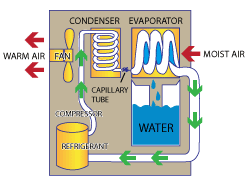 Dehumidifiers regulate humidity by removing moisture from the air and creating living conditions that are inhospitable to dust mites, mold and other allergenic organisms. Home dehumidifiers, like Comfort-Aire, work much like air conditioners–warmer, moist air enters the dehumidifier. Then it passes through refrigerant-cooled coils, causing the moisture in the air to condense on the coils within the machine. The moisture then collects in a drip pan or bucket for disposal, while the air is slightly reheated before being discharged. The reheat process is achieved by capturing and utilizing the heat generated from the energy expended to cool the air. By being slightly warmed, the air exiting the dehumidifier is both dry and warm, which means it will attract moisture like a magnet, thereby maximizing the dehumidifier’s efficiency. As the newest addition to our offering, Santa Fe crawlspace dehumidifiers are a popular line for basements, attics, and crawlspaces. While some models can be integrated with HVAC systems, this isn’t always straightforward. With steel construction, unmatched efficiency, and a range of models to meet your size and drying needs, Santa Fe dehumidifiers are a preferred choice for many homeowners with moisture control problems.
Commercial and industrial units, like our Ebac dehumidifiers work precisely the same way, but they have dehumidifier features like internal pumps and powerful fans that make them ideal for cleaning, water damage, and restoration projects. Another key feature of the Ebac line is that most are constructed of steel. This makes them heavier, but also lends itself to increased durability and longevity.
 If you are allergic to dust mites or mold–or if you smell a musty, mildew-like odor in your home, or see condensation on windows, walls, or floors, then you should seriously consider using a dehumidifier to improve your indoor air quality. Some allergens, such as mold, can turn into a serious and challenging problem to solve if allowed to grow unchecked in your home. In addition to health concerns, excess moisture speeds the natural process of oxidation. From metals to wood, every material found on this planet is subject to the process of decay and deterioration through oxidation. In bedrooms and spaces with carpet, maintaining indoor humidity levels below 55% can help reduce the presence of dust mites. They, like mold, need a certain level of moisture in the air to survive. Another common household problem that relies on humidity to thrive is the presence of household pests, such as roaches, spiders, and other insects. By keeping relative humidity levels low, you can make your home inhospitable to these common insects. When researching a dehumidifier, several essential factors should be considered before making a purchase.
Moisture Removal Rate
How much water does the dehumidifier remove from the air in a given amount of time? Some Ebac industrial dehumidifiers can remove up to 50 gallons of water per day. One of our Dri-Eaz commercial models can remove up to 140 pints of water per day at 80°F and 60% relative humidity. At the same time, the top-end Santa Fe dehumidifier, the Max Dry, can extract up to 155 pints per day from your crawl space or basement. Since your particular situation may not require a unit this powerful, a standard room dehumidifier is the most common type of dehumidifier sold today. Depending on the specific model, our Comfort-Aire room-sized dehumidifiers can remove between 30 and 74 pints of moisture per day.
Coverage Area
Matching the right size dehumidifier with the space you need to dry is key to getting the most out of your dehumidifier while keeping your home in the ideal 40-50% relative humidity range. Many dehumidifier manufacturers rate their machines by square footage, but this can sometimes be misleading, considering the height of a space can vary from a crawlspace to a basement or room in your home to a commercial warehouse space. Other manufacturers use cubic footage, but this measurement is not universally accepted.
Coverage of huge areas is also dependent on airflow within a given space and the current humidity levels. In large spaces, if the airflow is good, this can make the job of a dehumidifier easier. However, even if airflow is aided by things like ceiling fans or climate control/HVAC systems, high levels of humidity may still warrant the use of more than one dehumidifier.
In most homes, 50-70 pint dehumidifiers typically have a powerful enough fan to dry any single room adequately. For open basements, Santa Fe and AprilAire models are excellent options in the vast majority of homes. For crawlspaces, even the smallest Santa Fe models, as well as all Ebac and Dri-Eaz models, will dry sufficiently. You can do some tailoring when selecting your model by comparing CFM (cubic feet per minute) or air moved by each dehumidifier to give you a better idea between models when one lists square footage while another may list cubic feet.
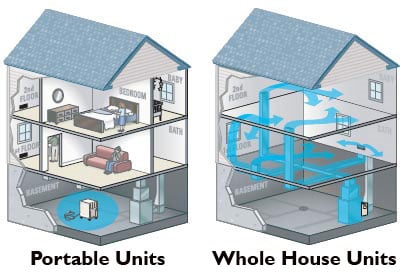
For areas of the country where humidity is a more persistent or severe problem, it may be worth considering the use of a whole-house dehumidifier. These units are directly integrated with the existing HVAC system and can help reduce moisture levels throughout the entire home. Not sure if a whole model is right for you? Check out our differences between single room and whole home dehumidifiers blog page.
Temperature Range
Suppose your dehumidifier is for a basement, garage, crawlspace, or any other area that may get cold during the winter. In that case, you will want to ensure it can operate at lower temperatures. Ebac dehumidifiers are industrial strength and have different temperature ranges depending on the model. Still, they all work well in low temperatures–most, like the Ebac CD425 Dehumidifier, work down to 33°F! The Ebac Desiccant Dehumidifiers work at even lower temperatures. The Dri-Eaz line of low-grade refrigerant (LGR) dehumidifiers is designed to operate in temperatures ranging from 33°F to 100°F. At this point, it is worth noting that below 50° or so, the efficacy of a refrigerant-based dehumidifier drops significantly. So, while all models will run, starting from just above the freezing point, their efficiency is dramatically reduced until the temperature reaches around 50 degrees. For most of these basement, home, and crawlspace models, low-end temperatures are not a significant concern, as these spaces typically stay above 50°F.
Choose a dehumidifier, keeping in mind not only the temperature range but also the overall climate of the region in which you live. For instance, in the Northeast, a dehumidifier would be particularly useful since humidity remains high from May to October, while the temperature may remain mild. An air conditioner, which also removes some moisture in the air, would not run enough (due to the lower temperatures) to adequately control the moisture levels in your home. In this case, a dehumidifier would be an excellent fit.
Humidistat – Setting Your Humidity Goal
Similar to a thermostat, a humidistat indicates the relative humidity and allows you to adjust it to the desired level. Most dehumidifiers generally come with built-in, adjustable humidistat controls. Sometimes, it may also include a digital readout, while in others, it may simply be a dial to adjust from wetter to drier. In the smaller, portable dehumidifiers and many water damage restoration models, there is only on/off functionality. If you need to monitor the relative humidity in your home, we offer an affordable, high-quality humidity gauge, the Acu-Rite Digital Humidity Gauge.
To Pump or Not To Pump – Removing the Condensate
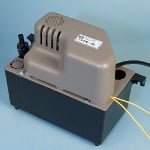 Most, if not all, good dehumidifiers provide a small length of hose. This drain line allows condensate to flow directly out of the dehumidifier into a nearby sink or floor drain. Using only gravity, this process of “porting” your dehumidifier eliminates the need to empty a water reservoir. In some instances, a gravity drain is simply not feasible, and in crawlspaces, the supplied hose is rarely long enough to reach outside the space. This is where a condensate pump comes in handy.
This separate pump operates similarly to a sump pump, collecting condensate in a small reservoir. Once it reaches a certain point, it expels the water, often pushing it up to 25 feet horizontally. Larger dehumidifiers and restoration dehumidifiers typically have pumps integrated into them, providing a 20-25-foot hose. Still, even some smaller, room humidifiers have an integrated condensate pump, like the Comfort-Aire dehumidifiers. Whether you need a pump largely depends on your specific circumstances, but almost anyone can benefit from using a pump that comes either as a basement package (as with Santa Fe dehumidifiers) or as an integrated model (as with many Ebac and Dri-Eaz models), which can provide added convenience.
Dehumidifier Buying Guide – Other Factors to Consider

Like all appliances, different dehumidifiers use different amounts of energy for operation. Typical dehumidifiers can use anywhere from 50 to 800 watts of power. (For comparison sake, a typical lamp uses about 60 watts, while a typical computer uses about 365 watts). Danby, Soleus, and Santa Fe dehumidifiers are all Energy Star compliant for lower energy costs. Santa Fe dehumidifiers, in particular, are the most energy-efficient dehumidifiers available, with some exceeding Energy Star minimum requirements by as much as 50%. This can make a large impact on your yearly power bill. For a good comparison, particularly between larger dehumidifiers, look for the Energy Factor. The higher this number, the better, as it tells how many pints or liters of water are extracted per kilowatt hour of electricity consumed.
All the room dehumidifiers we offer are relatively quiet, with the Albert, by Stadler Form, being the absolute quietest refrigerant-style dehumidifier we offer. For those who have owned older models of dehumidifiers, you will find that these new models are much quieter than their predecessors. Larger dehumidifiers (whole house or for commercial use) like Ebac are louder than room-size units, but they are generally installed near or around your HVAC unit, on job sites, or outdoors. Whole-home dehumidifiers are generally quiet, and if the noise of your HVAC running is not an issue, Dri-Eaz, Aprilaire, or an Ebac dehumidifier will likely not cause you any problems.

Most modern dehumidifiers were designed to be user-friendly. For example, Comfort-Aire dehumidifiers feature electronic controls, fully adjustable humidity settings, auto-defrost, auto-restart features, removable and easy-to-clean air filters, and direct drain options for continuous operation. Look for these options that will make your life easier:
- Water level control to prevent overflow (typically a float)
- Full Tank Light that lets you know when it is time to empty the tank
- Drainage/Porting option so that you do not have to worry about repeatedly emptying the tank
- The easiest option would be an integrated condensate pump
- Anti-Frost Sensor (or Auto De-icer/auto defrost that keeps the dehumidifier from freezing up)
- Mobility–most of our room dehumidifiers come with wheels or casters for easy transport, and nearly all come with built-in handles. Even some of the basement/crawlspace models, like the Santa Fe Classic and most of the restoration models, come with casters.

A manufacturer’s reputation and the experiences of past customers deserve consideration in your decision. Certain manufacturers and products are highly respected in the industry for a reason–and the same goes for products that have garnered less respect. So, whether it is a review or award issued by a nationally recognized magazine or simply an excellent review from someone just like you, it pays to do your research before buying.

A one-year warranty is the standard in the industry. A two-year warranty is even better! Take into account what the warranty covers–motor, fan, electrical components, the refrigeration system? Also, find out if certain customer actions will void the warranty. Warranties are your insurance policy against defect and malfunction, so it is prudent to take these into account when choosing a dehumidifier for your home.
Now that you’ve read through the Dehumidifier Buying Guide, when ready, you can shop all dehumidifiers or check out one of these helpful resources before you buy dehumidifiers online.
✔ Dehumidifier FAQs
✔ Dehumidifier Water Removal Options
✔ Top Five Crawlspace Dehumidifiers
✔ Top Five Room Dehumidifiers
✔ Top Five Basement Dehumidifiers