
You cannot see them. You cannot feel them. You cannot smell them, but they are there. At 250 to 300 microns in length, dust mites are too small to be seen with the human eye (about three of them could fit inside the period at the end of this sentence). So, it comes as no surprise that dust mites were first discovered by the inventor of the microscope, Anton van Leeuwenhoek. In 1694, Leeuwenhoek reported his discovery of microscopic “little animals” that live in dust. And thus, our knowledge of dust mites began!
So What Are Dust Mites?
 Dust mites are indeed “little animals,” but they are not insects. They are eight-legged arachnids, more closely related to spiders and ticks than ants or fleas. They have been on earth for over 400 million years, and although there are over 100 million species living on land, the two most common house dust mites are Dermatophagoides farinae (American) and Dermatophagoides pteronyssinus (European). For those readers who are not current on their Latin or scientific terminology, “Dermatophagoides” means “skin eater.”
Dust mites predominantly live in bedding, carpet, upholstery, and stuffed toys. They eat dead skin from humans and other animals. Ironically, while dust mites survive off our dead skin, it is THEIR dead skin that makes US sick. As dust mites grow, they shed their skin. Their old skin can cause allergic reactions in some individuals. Dust mite feces also spur allergic reactions. (Dust mites themselves are not inhaled; rather, their waste particles and shed skin cause allergic reactions after being inhaled.)
House dust mites are one of the most common causes of allergies, asthma, and atopic dermatitis (eczema). At least 10% of the population and approximately 80% of all allergy sufferers are allergic to the dust mite allergen.
Why Do Dust Mites Cause Allergic Reactions?
 Specifically, proteins found in dustmite waste particles cause allergic reactions. These proteins can be found in dust mite feces, skin, and decomposing body fragments. As with most allergies and inflammatory reactions humans, it is these protein allergens that trigger the allergic reaction. Dust mite feces contain a powerful enzyme that breaks down the droppings. This evolutionary biological process allows for the remaining fecal nutrients to be eaten by dust mites if food is scarce. When dust mite allergen is inhaled, these powerful enzymes enter the lungs and break down protective tissue, causing respiratory problems.
How Can Such a Tiny Critter Produce So Many Allergies?
 Like other insects who lack a true respiratory and circulatory system, dust mites flourish in warm, humid environments, so their populations are higher during the summertime and in warmer climates. They especially love a warm, moist bed or pillow, as these two things can trap heat and moisture that dustmites absorb through their body to survive. This also an ideal location since it provides a readily available food source – dead human skin cells. Humans shed two to three pounds of skin a year.
So Many Mites, So Little Time
 Depending on its age, your mattress may contain between 100,000 and 10,000,000 dust mites. Dust mite populations increase rapidly with each egg-laying female having the ability to increase the population by 25 or 30 new mites per week. During its 80-day lifespan, the average dust mite produces about 1,000 allergenic waste particles. This means that over the course of it’s very short lifespan, an average dustmite can produce 200 times its body weight in allergenic waste. This waste easily becomes airborne and forms a significant portion of house dust. A half teaspoon of dust can contain as many as 1,000 dust mites and 250,000 allergenic waste particles. Dust mite allergen and other debris can form not only the visible dust in your home but significantly reduce the indoor air quality (IAQ) in any space.
So How Do I Get Rid of These Things?
 When you consider how simplistic their biology is, it would seem that dust mites would be easy to kill… and you would be wrong. Like most very basic organisms, due to their simplicity, they are a permanent houseguest. Unless you live in a clean room or use very expensive equipment, it’s almost impossible to get rid of every single dust mite in your home. Despite this, there are two specific ways to improve the air quality in your home – limit the source of the allergen and remove the allergen.
Limit and Remove – A Successful Dust Mite Story
 Predominantly, dust mites live in your bedroom. Since the mattress provides the perfect home and your dead skin is a nightly buffet, the bedroom is the first place to start in killing them. Dust mite bedding is the first line of defense against dust mites. These tightly woven, zippered encasings completely cover you mattress, pillow or duvet and form a barrier between you and the dust mite allergen in your bedding. A Johns Hopkins University study showed that “mite population and allergen levels decreased by 90% or more within a month of placing mattress and pillow covers and treating bedding.” And by reducing the allergen, you can reduce the reactions, leaving you breathing better and feeling better.
It is especially important to note the pore size on mattress and pillow covers. High quality allergy relief bedding such as Allergy Armor Ultra has an average pore size of less than 3 microns. This is enough to keep dust mite, pollen, and even tiny cat dander out of your mattress or pillow. When it comes to trapping and killing dust mites and their allergen, the smaller the pore size, the better.
 The dust mite covers should be washed two to four times per year, but all other bedding should be washed in hot water and much more frequently. For safety reasons, many washing machines do not use water hot enough (140° F) to kill all dust mites. If your washer does not get hot enough, there are a variety of anti-allergen laundry washes and dust mite laundry additives that denature the protein allergens in your bedding and clothing. These are effective regardless of the water temperature. For killing dust mites in your bed, you can also use a quality steam cleaner that use minimal moisture and extreme heat to sanitize and kill allergens like dust mites. With a quality vapor steam cleaner, the moisture in the steam is so low, it often evaporates in seconds.
 Vacuum your mattress with a HEPA vacuum cleaner before putting on your dust mite bedding. A vacuum with a HEPA filter, particularly when used after stean cleaning, removes and traps allergens, preventing them from blowing out through the exhaust and back into the air you breathe. A HEPA vacuum is critical for carpeted floors since carpeting can house vast numbers of dust mites. When possible, opt for smooth/hard flooring over carpet, particularly in bedrooms. When considering a HEPA vacuum, look for a sealed system and certified HEPA filter. And when you’re finished vacuuming your mattress, move on to any upholstered furniture and finally to your flooring.
 Avoid upholstered furniture. Though some may try to sell you on leather furniture because of the look or feel, the fact is, it IS a better type of furniture for allergy sufferers, as dust mites cannot burrow through leather. For carpeted rooms, use a dust mite carpet cleaner to denature dust mite allergens. Keep your clothing in a closet with the door shut. Wash and dry-clean clothes frequently. Consider using a laundry additive such as Allersearch Allergen Wash to get rid of dust mite allergens on your clothes.

Dust mites grow best at 75-80% humidity, and they cannot survive when the humidity is below 50%. Monitor your home’s humidity with a hygrometer and reduce the humidity with a home dehumidifier. Both steps will go far in controlling the dust mite population.
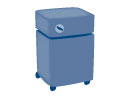 Finally, use a sealed system, HEPA air purifier, to remove dust, airborne dust mite waste particles, and other allergens from the air in your home or office. In areas like your bedroom, closing the doors and windows can allow an air purifier to effectively cycle the air through the HEPA filter and reduce allergen levels in that space. Once again, less allergen, less reaction.