
Mask breathability is a critical factor when exercising with a face covering, as physical activity naturally increases breathing rate, body temperature, and moisture buildup. During workouts, restricted airflow and trapped heat can quickly lead to discomfort, making it harder to maintain endurance and focus. A mask that allows proper air circulation helps regulate temperature while still providing necessary coverage, especially during high-intensity or prolonged exercise.
As the body heats up, moisture from breath and sweat can accumulate inside a mask, reducing comfort and making breathing feel more labored. Poor airflow can also contribute to feelings of dizziness or fatigue during exercise. Breathable materials are designed to allow heat and moisture to escape more efficiently, helping the wearer stay cooler and more comfortable without constantly adjusting or removing the mask.
Choosing a mask with proper breathability can improve overall exercise performance by supporting steady breathing patterns. When airflow feels less restricted, it becomes easier to focus on form, pacing, and stamina rather than discomfort. This is especially important for activities like running, cycling, or strength training, where consistent oxygen intake plays a major role in physical output and safety.
Understanding mask breathability helps individuals make informed choices about face coverings for active situations. A well-designed, breathable mask can reduce heat buildup, limit moisture retention, and promote comfort throughout a workout. By prioritizing airflow alongside fit and material quality, exercising with a face covering becomes more manageable and less disruptive to physical performance.
We field a pretty wide variety of fitness information, regularly, but there are two I wanted to go over today. The first is, do cold-weather masks help? The second question generally revolves around face mask breathability, particularly with regard to exercising in the heat. With the temperatures in Atlanta finally settling more in line with typical weather temps, I tried out two different masks while jogging this past week, and those experiences may be helpful in helping to answer both of these common mask questions. Working with a qualified Personal Trainer can also help individuals stay motivated, improve workout performance, and safely adapt exercise routines to different weather conditions and training environments.
First, I need to start by saying that I’ve let the holidays get the best of me. Truthfully, I didn’t try to fight it and fully indulged, expecting to not only add on several minutes to my 5K time but to also add a couple pounds to my midsection. Success!  The main point is, while I’m not quite back to form in terms of running, it’s not like I just made a New Year’s resolution to get active after having let my posterior take root over the last five years. The other thing that’s noteworthy is that I smoke. Yes, I know, a winning combination, smoking and running. The point in bringing this up is that when I run in freezing or below-freezing temperatures, my lungs and throat typically spend the next couple of hours feeling terrible. This was true even before I picked up this habit, but as a smoker, I feel like that effect lasts longer than for someone who’s a non-smoker.
This all brings me to the first question. Do cold-weather masks help? Yes! Both of the masks I tried helped, particularly with regard to eliminating that icy, congested lung feeling I normally get after a freezing jog. Whether it is a mask specifically designed for cold weather or more generally an allergy mask, all will help to varying degrees. Any face masks for exercising that offer worthwhile filtration will trap some heat and moisture. There’s really no getting around this, but some models do a better job of allowing heat and moisture to escape, which makes them better year-round masks. Others, like the ICanBreathe Cold Weather Mask, purposefully trap moisture and heat.
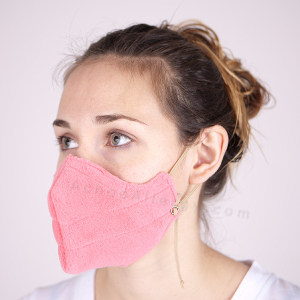 In terms of mask breathability, exercising can be a tricky proposition. For rigorous exercise, I view breathability on a scale from bad to awful. When you’re hitting it hard and gasping down the homestretch, a mask is generally one of the last things you’re thinking about, except when it’s blocking too much air. For a light to moderate jog, cycling, and walking, etc., mask breathability CAN make a difference. So heavy exercise = mask is probably going to be a hindrance. Light to moderate exercise = pay attention to breathability ratings for masks.
Just for the record, I’m not big on selfies, but I do have pictures of much prettier people than I wearing these masks!
 With the ICanBreathe Cold Weather mask, I found the warmth was probably more than I needed. I jogged just under 3.5 miles at a fairly slow pace (9-minute miles). The temperature was right around 34° when I started, but the wind was bitter. By the time I was finished, the mask was pretty damp with moisture from breathing. The upside was that afterwards, my lungs felt fine. Despite what my legs were saying, my lungs and throat felt as if I hadn’t even gone for a jog. So overall, it did its job. It protected my lungs and didn’t hinder my breathing during a light jog. The only downside was I did still get some smoke odors passing through (several of the neighbors are still burning leaves and pine needles).
The second mask I ran with was a Respro Ultralight. We don’t currently have that model in stock, as it’s so similar to Sportsta. The Ultralight’s mesh body is slightly thinner, and the nose piece isn’t adjustable, but Sportsta is a close approximation. For the purposes of this post, I’ll refer to it as a Sportsta. With the Respro Sportsta mask, things were similar. This time, the temperature had dipped to 32°, and with the wind chill, it felt like a brisk 17°! It took a little more time to get the mask adjusted properly, but this was mainly due to me trying to wear a medium size when I should have worn a large. It’s good to remember that as a product made in the U.K., Respro sizing is a little small.
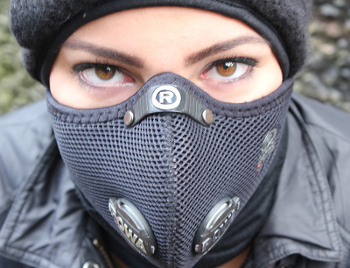 Overall, I was happy with the way the mask performed. It was really damp by the time I finished (just a tick under 4 miles at an 8-minute per mile pace). Unlike the ICanBreathe, the Sportsta is primarily made to filter the air, not warm it, and even though the filter lacks carbon it did manage to block all of the smoke odors during the run. I noted this simply because twice I stopped to stretch and dropped the mask from my face. In terms of mask breathability, it wasn’t so difficult that I felt like it affected me, but it was not quite as easy as with the ICanBreathe. With the Sportsta, however, I did run further in roughly the same timeframe. Both masks are a decent choice for asthmatics or anyone who copes with cold weather induced asthma. Each warms the air and protects your lungs. When striving for optimal performance during your workouts, make sure to use the right gym clothing to enhance comfort, flexibility, and overall exercise experience.
Hopefully, this helps shed a little light on these two questions. It can be hard to quantify things like mask breathability or how much warmth it traps. Even if there were independent tests to rate these things, the conditions under which each person uses a mask can vary so widely that it would almost render ratings moot. Sharing experiences with others should help to give you a better idea of what may or may not work for you.