
Understanding Air Exchanges per Hour and Air Purifier Coverage Area As many of you who have shopped or browsed our site have seen, there’s a section on each product page where we field your specific questions about products. All are answered and many posted back to the website to help others. One question that has popped up several times in the last two weeks is about air exchanges per hour (ACH) and coverage area. I’ll go over it a bit here, and if you want more detailed information, provide a link to a more in depth piece about ACH, below.
Two readers astutely pointed out a discrepancy between what Austin Air states as their coverage area for the HealthMate air purifier and what we state. Austin lists the HealthMate with 1500 sq. ft. of coverage, while we say it covers 750 sq. ft. Who’s correct? Technically, both.
 Coverage area is determined by a couple things. First, how powerful the fan is. The more powerful the fan, the larger volume of air it can move and ultimately clean. The second is how you actually define coverage. Air purifiers aren’t like paint. With paint you’re going to get about x number of sq. ft. out of each can. This number can vary a little depending on how heavy you apply, but generally, if four people paint with the same bucket, they’re going to get pretty similar coverage areas. With an air purifier, the coverage not only describes how large of a room/space it will operate in but also sheds some light on how well it will actually clean in that size of space.
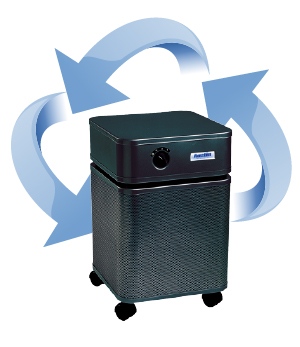
 It’s wise to remember how an air purifier works. Air moves through the filters, pulled in by the fan, and once cleaned, it’s pushed back into the room. This process happens over and over, and for good reason. Air is constantly being polluted with indoor and outdoor allergens and particles. The ACH is the measure of how often an air purifier can cycle through the entire volume of air in any space, and this is linked to how powerful the fan is. If you have a very powerful fan and the air purifier is operating in a small room, it’s going to have the ability to cycle through all the air in that room many times per hour. If you take that same air purifier and place it in a large cavernous room, it may only be able to cycle through that volume of air once or twice per hour.
So in large part, coverage area depends on how many air exchanges per hour you want to target.
We generally recommend a minimum of four ACH per hour, and that’s true for every air purifier we sell. That’s the minimum though, and if possible, we recommend getting to six per hour. Air purifier manufacturers vary when it comes to ACH. Some rate the coverage of their machines based on 5 or 4 ACH and some, like Austin, base it on 2 ACH. This means, that Austin Air Purifiers will appear to have very large coverage areas, when it reality if your goal is to filter all the air in your room at least 4 times per hour, then the space can be no bigger than 750 sq. ft. If someone else only needs light filtration, say 2 ACH, over a larger area, then perhaps the Austin HealthMate is perfect for a 1500 sq. ft. area.
As you can see, coverage and ACH are closely linked, and as I’ve shown here, when it comes to who’s right – Austin or us? Both.
For more information on how to calculate air exchanges per hour or visit our highly informative Air Purifier Buying Guide for all the info you need to make the most informed choice about which HEPA air purifier is right for you.
Author: K. Gilmore
In the rush of the holiday season, you, like me, may have missed an interesting story about bed bugs. I don’t blame you though. Bed bugs are repulsive little beasts. If you thought the idea of millions of microscopic dust mites feeding on your dead skins cells inside your mattress and pillow was gross, then the notion of tiny, visible, insects that come out at night to suck your blood is something straight out of B-movie horror flick (something probably not as good as Evil Dead but likely much better than The Night of Lepus). So what’s the new research all about, and why are these creatures still a thing anyways? Time for a quick history lesson and then, some science!

Bed bugs were common in the U.S. during the early part of the 1900s. If you were alive during the 1930s, you likely had bed bugs in your home. By the middle of the century, bed bugs had largely been eradicated with the use of pesticides. This had its own set of problems as later research showed that many of the chemical pesticides used were extremely toxic. After decades of relative calm, bed bugs made a huge comeback in the early 2000s. With old pesticides now banned, pest control companies and individuals have struggled to eradicate them. Newer chemicals aren’t quite as effective as in the past, so often people rely upon washing what can be washed, throwing away what can’t, covering their mattress with bed bug proof covers, using extreme heat, and chemicals to corral and kill these tiny pests.
One specific line of research aimed to combat bed bugs has focused on pheromones and how bed bugs communicate. While scientists have had some idea, they hadn’t been able to pin down what specific chemicals play a role or the exact role they play. In the past researchers have found that specific compounds they have tried to use as repellents or attractants would work in the laboratory but fail miserably in realistic test applications.
And while the thought of sleeping with tiny little vampire insects who come out at night while you sleep to bite you and feast on your yummy blood repulses pretty much anyone with a heartbeat, researcher Regine Gries bravely offered herself up in the name of science. For nearly five years, she allowed thousands of bed bugs to make a meal from her arms.

(To this I say, “Nope, nope, nope, nope”) Unlike others, Gries reaction is relatively benign when bitten. While most suffer itching, swelling, and a rash, Gries only develops a slight rash from the bites. So after five years and 180,000 bed bug bites, what have they found? A lot, actually.
In all, researchers discovered five components to the pheromone attractant that bed bugs emit. They also found one compound, histamine that acts as a repellent. So what does all this mean? With additional testing, this information could be used to create pheromone based traps, repelling bed bugs away from certain areas of a room and attracting them with pheromones to traps. Unlike expensive and toxic pesticides, this type of treatment would lack the cost and harmful side effects.
While a consumer-based solution is still some time away, it would appear that researchers are on a track that could keep bed bugs at bay in a much safer way than in the past. And thank a scientist! I’m know I’m not volunteering to be a walking buffet for bed bugs. How about you?
To read the abstract of the research report or to read the press release regarding bed bugs and pheromones.
Author: K. Gilmore
Tags: Bedbugs
 The last few days have been like a sucker punch to much of the country. Extreme cold, and in some places heavy snow, have ushered in the new year in a way most of us would rather just forget. In addition to concern over the colder temperatures, the dropping mercury presents some specific challenges for people with asthma. Go outside, and the cold, dry air can often trigger an asthma attack. Stay indoors and increase exposure to indoor allergens, which are generally more pervasive during the cold months as most homes have little chance to air out when it’s freezing. And when simply going outside can trigger an asthma attack, it all but rules out trying to exercise outdoors. So what options do you have? Here are a few tips to help reduce your chances of an asthma attack during these frigid days.
- Dress Appropriately – Few things will cause you more problems than not dressing appropriately.
 In addition to simply being uncomfortable, extreme cold temperatures can lead things like frostbite and hypothermia. Granted, these are extremes, but when a stiff breeze drives the wind chill well below zero, these become real concerns.
 - Wear a Mask – Whether going for a stroll or trying to exercise outdoors, breathing in cold, dry air is an almost instant trigger for asthma. The cold air coupled with the extreme dryness of cold air can be mitigated with a quality cold weather mask. Masks trap heat and moisture as you exhale, which means as you inhale, some of this trapped heat and moisture warms and humidifies the air you breathe in. Simple but effective, a cold weather mask can make all the difference when outdoors during the winter.
- Remember Your Medication – Many people with asthma take a daily preventative, and during cold weather, it becomes even more paramount to maintain this regimen. Additionally, rescue inhalers should always be on hand, particularly if you are exercising. Being cooped up indoors is often not much better, but by maintaining your medication and cleaning the home regularly to remove allergens, you can reduce reactions.
- Maintain Proper Indoor Humidity – If you’ve spent time outdoors in freezing temperatures, few things refresh you and help you clear out your airways better than a hot shower. Why?
The warmth and the humidity soothe dried airways and help loosen mucus that has cooled and settled in your airways. Beyond a warm shower, maintaining proper indoor humidity levels can keep your home comfortable and eliminate dry air that aggravates asthma, and the easiest way to accomplish this is with a room humidifier. They come in a variety of styles and sizes and offer warm or cool mist to restore moisture and soothe airways.While none of these things can fully prevent an asthma attack. They all can greatly reduce the risk of triggering an attack during these cold months. For more information as to why your nose runs more in cold weather, check out our recent post.
Author: KevvyG
New Year’s, Cedar Allergies, and Resolutions A new year is a fresh start, a clean slate, so why didn’t old problems get the memo? For many, the new year kicks off a new struggle with allergies. The colder temperatures usually drive plants into dormancy, and pollen production in most species grinds to a halt, but as with every trend, rule, or pattern, there’s always an exception. Winter’s allergy exception is cedar or juniper pollen, and now is the time when these trees often begin to rain misery down upon the American Southwest.
We’ve discussed cedar allergies in the past, and like in years past there are a couple simple things you can do to help reduce exposure. A high quality allergy mask is a simple but effective way to reduce allergens while outdoors. Indoors, replacing your HVAC filter or air purifier filter are also an excellent ideas.

For those with masks, now might be a good time to pick up a couple replacement filters, and if you have any specific questions about masks, feel free to drop us a line via the Customer Question section of any product page on our site.Beyond cedar, many of us are recovering from New Year’s Eve. From enjoying yourself a little too much or simply staying up too late, New Year’s offers a variety of ways to leave us feeling a little less than prepared to tackle all those New Year’s resolutions. Speaking of resolutions, did you make any this year?
There are millions of resolutions made each year. Lose weight, quit smoking, eat better, spend less time working and more with family, floss more than once a week, and fix that loose tile that you keep stubbing your toe on are all one someone’s list. Personally, I’ve never been real big on resolutions. To date, I’ve made one, and I kept it. It was three years ago, and my resolution was to eat more chocolate. I’m an adult and since we only get one go round on the ferris wheel of life, I personally see little point in not enjoying it. Besides, resolutions seem too much like self-punishment or some form of masochism. When I see or hear about these types of resolutions, I think, “nope, nope, nope.”
So in that year, I purchased nearly four dozen bags of Dove chocolates, you know, the little individually wrapped pieces with personalized messages. In total, it was roughly 42 POUNDS of chocolate, and I enjoyed every one of those bite sized treats. That same year, I lost around 45 pounds. Granted, chocolate wasn’t necessarily my key to dropping weight, but my point is this. At the time in every year when people resolve to better themselves, their health, and their lives, it’s important to remember we’re not robots. Change isn’t particularly easy for many of us, and kicking bad habits is often a long difficult process. None of these things though should feel as if we’re punishing ourselves. Goals should be made with end result in mind, but it’s almost as important to reward yourself along the way. Habits don’t become habit overnight, and that’s true for both the good and bad ones.
On behalf of everyone here at AchooAllergy.com, I’d like to wish you a Happy New Year and the best of luck in of your resolutions!
Author: KevvyG

Posted by kevvyg on Tuesday, December 23, 2014
As the second of the new additions to our AirPura HEPA air purifier offering, the UV600 places the focus of filtration on microbes, bacteria, and viruses. With flu season in full force, the time is right to take a look at this well rounded, antimicrobial air purifier.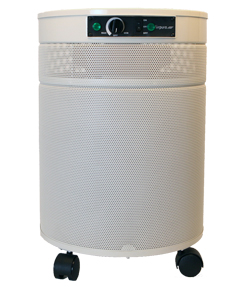
When it comes to microbes, there are really only two options in terms of neutralizing them – antimicrobial treatments and UV light. Antimicrobial treatments act the same as hand sanitizers, often a blend of agents that kill microbes that pass through the HEPA filter. With the AirPura UV600, you get the other type of technology, UV-C light. UV light has long been shown to neutralize microbes. Since this phenomenon was first described in 1878, UV light has been used in a variety of applications from hospitals to deli counters. A look into how UV light works, demonstrates why it is so effective and why you find it in a broad range of industries.The two methods in which UV light works is by either breaking molecular bonds within the microbe or physically altering the DNA. In both instances, the end result is either the destruction of organism or an alteration of the DNA to the point where the microbe cannot replicate. In either case, the end result is the effective neutralization of viruses, bacteria, and other germs.
There are also two factors that can shape the effectiveness of UV light – exposure time and wavelength. Exposure time is key to killing microbes. UV light can be strong and of the right wavelength, but if the exposure time is too brief, it may take multiple passes to effectively kill the microbe. Wavelength also effects the efficacy, with 254 nanometers being the wavelength of UV light ideal for neutralizing microbes.
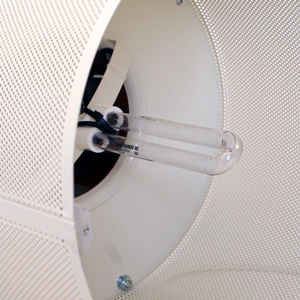
With the AirPura UV600, the bulb is placed in the center of the filtration chamber, allowing it to effect all microbes that are ensnared in layer of filtration of nearest to it, the HEPA filter. Additionally, the lamp is a UV-C lamp that produces the wavelength necessary to kill microbes.In addition, to the UV bulb, the AirPura UV600 air purifier has the staples that make AirPura a solid choice for broad removal of pollutants and irritants in your home. A large particle preflight traps visible particles and helps to keep the other layers of filtration clean. After passing through this, the air travels through a 2″ thick carbon filter that adsorbs chemicals, odors, and smoke. As the last two phases, a medical grade HEPA air purifier removes you particle allergens like dander, dust, mold spores, and pollen before the UV light neutralizes microbes. All four layers of filtration are enclosed in a durable steel shell, and for those concerned with noise, the AirPura offers the quietest operation on the lowest fan speed, nearly silent. Like the other models in the AirPura line, the UV600 offers simple operation and the best coverage area of any residential air purifier available.
In all, the UV600 offers comprehensive filtration ideal for those coping with a variety of irritants and anyone looking to reduce microbes in the home or office. To see the full line of AirPura home air purifiers.
Author: K. Gilmore
Yes, I know what you’re thinking. How could an air purifier be anything like a night club? When you think about some of the different layers of filtration, you have some of the usual suspects that you may find at any trendy club.
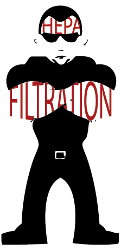 Let’s start at the door. The first person you often see if someone checking IDs. This person also turns away people who aren’t dressed appropriately or anyone who seems like they might cause problems once inside. This character is a lot like your HEPA filter. Pollen, dander, dust, and other D-list celebrities (Note to Bruce Campbell – You’re in!) aren’t allowed to pass, and for people with allergies or asthma, they represent potential troublemakers. The HEPA filter refuses to allow 99.97% of all particles 0.3 microns or larger to pass.
A certain group of troublemakers get by the HEPA filter. They dress the part and for them, the HEPA filter makes an exception. This group includes things like smoke, fragrance, chemical vapors, and exhaust emissions. Fortunate for you though, you have a friend on the inside – activated carbon.
 Activated carbon is the equivalent of a social butterfly. He’s hip. He’s cool, and he REALLY enjoys giving out free hugs. While smoke, chemical vapors and others may get by the HEPA filter, activated carbon seeks these characters out, and once he finds them, it’s time for a hug! Like long lost pals, molecules bind with activated carbon in a warm, permanent embrace. Because of the molecular composition of activated carbon, substances are naturally attracted to him, but there are still some things that can slip by the embrace of even activated carbon. This is where a blended carbon filter comes in.
Friends of activated carbon can vary, but all help him do his job better. Some friends, like zeolite will attract and soak up chemicals.
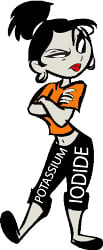 Others play a slightly different role. Substances like potassium permangante, potassium iodide, magnesium dioxide, or copper oxide act in one of two ways. They either seek out some of the bad apples that slip by activated carbon and bind to them, or they play the role of the “mean girl”. Particularly harmful compounds like dioxins and hydrocarbon pollution are literally broken apart into smaller, inert components via the process of oxidation. So in this way, they broaden carbons ability to remove reaction causing compounds.
So, yes, your air purifier is actually like a night club, and some of the best filter out a wide range of bad apples and prevent them from causing you problems. Knowing what triggers your reactions and matching it to the right filter media is the winning combination when it comes to controlling asthma, allergies, and chemical sensitivities.Want to see our top pick for best air purifiers for allergies and asthma or our top MCS and VOC air purifiers? Or click here to see a picture of my dog in a Santa hat (he is NOT amused).
Author: K. Gilmore
Since we first introduced them this spring, the AirPura line of HEPA air purifiers has been steadily climbing in popularity. With the largest coverage area of any residential air purifier, the quietest operation, and a simplistic yet highly effective design, it’s no wonder why these models have been garnering the attention of anyone wanting to improve their indoor air quality. There has been a good deal of interest in some of the other models that AirPura makes, and in response to this, we’re expanding our offering! As the first expanded model, we’re taking the C600, which is great for
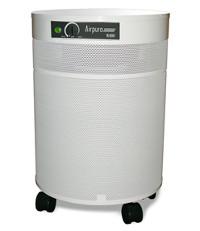 removal of things like smoke from fires and tobacco as well as odors and fragrances, and now offering the C600DLX air purifier.
What’s the difference between the C600 and C600DLX? In reality, they are much more alike than different. Both have the staple features of an AirPura, including quiet operation, the largest coverage area, superior airflow, separate filters, simple operation, steel construction, and a sealed system. Throughout both machines, there is very little plastic or adhesive, and the gaskets are felt instead of rubber or foam. These things reduce the potential for off-gassing, which is particularly important for people with chemical sensitivities.
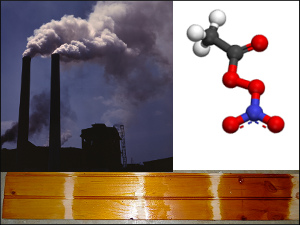
The primary difference between these two models is in the carbon filter. While both use 26 lbs. of granular, activated carbon, created from a coconut shell base, the C600DLX employs a blend of carbon. Very similar to the VOCARB blend that you’ll find in a competing brand, the AirPura C600DLX carbon blend is designed to capture a broader range of chemical vapors, making it uniquely suited for a VOC filtration. So while the standard C600 is great for most residential applications, for situations dealing with heavy concentrations of VOC from industrial pollution, exhaust emissions, or large areas of newly painted walls or newly finished floors, the C600DLX is an excellent alternative. Perhaps the best part about these two models – the filters are interchangeable. If you have a C600 and want better VOC filtration, simply purchase the C600DLX replacement filter when your current filter is all used up, and you’ve turned your C600 into the C600DLX.
The C600DLX is the first in a few models that you can expect to see added to the line in the coming week. For more information on the C600DLX air purifier or to see all AirPura models.
Author: KevvyG

Today is your last chance to take advantage of our Black Friday/Cyber Monday savings. You have until midnight tonight to take 15% off your purchase by using promo code SHOP14 when you check out. Take 15% off air purifiers, HEPA vacuum cleaners, allergy bedding and organic blankets, top quality home humidifiers, and all the products you want to make this holiday season an allergy-free one!Also ending today is the the Reliable steam cleaner sale. Take up to $100 off select Reliable steam cleaners. Sanitize and deep clean your home for holiday visitors, removing dirt, grime, and killing viruses and bacteria all without the chemical odors and residues. With just the power of heat and steam, you can deep clean a better way.
Remember, each order enters you into our drawing for a $500 Prepaid VISA gift card. So take advantage of these savings while they last and get a chance to sweeten your holidays with a $500 gift card to spend on whatever you like.
Author: Kevin Gilmore
Posted by kevvyg on Monday, December 01, 2014
Being an Ohio native, though admittedly not a big Bengals fan, I found the recent Geico ad featuring Ickey Woods hilarious. I watched Woods run the ball for years with the Bengals, but seeing him do his “Ickey Shuffle” then spike a package of cold cuts at the deli counter cracked me up. Though humorous, the ad has given Woods a new avenue to promote a cause that effected him very personally – asthma.
 In 2010 his son, Jovante, died of a severe asthma attack. A student athlete who was just 16 years old at the time, Jovante had been diagnosed with asthma at the age of two. In honor of his son, Woods started the Jovante Wood Foundation based on three things that came to define his son. In addition to asthma awareness, the other two keys of the foundation are organ donation and education. Unaware at the time, Jovante had actually signed up to be an organ donor, which at the time of his passing helped to save the lives of others. And, while he played football like his father, Jovante was also an A student, maintaining a 3.8 GPA in high school.
Asthma affects roughly 25 million Americans and causes nearly two million visits to emergency rooms across the country each year. While mortality rates remain relatively low, about ten people per day die from asthma attacks. What is likely most troubling is that, according to the Center for Disease Control, asthma rates have been trending up, from affecting 1:14 in 2001 to 1:12 in 2009.
Though asthma can be managed, there are a variety of factors that can effect asthma outcomes, from environmental issues and exercise to proper prescriptions and avoidance of triggers. For many,
 education remains a key factor, which is why things like the Woods Foundation and another initiatives (even apps/games like the WellaPets we mentioned a while ago) remain important. In an interview with a local ABC affiliate in Woods’ hometown of Fresno, he mentions one thing that he “didn’t know is that asthma could kill.” He’s not alone. When it comes to asthma so many of us have a similar mindset, in that asthma has become so common, we can sometimes lose sight of just how powerful it can be.
Ickey Woods’ NFL career was cut short because of injury, but he continues to use that brief time in his life to promote a cause that effects millions across the country. Woods was ecstatic to have his number called (number 44) at the deli counter, but he was still wearing his old Bengals number on his t-shirt, #30.
For more information on the Jovante Wood Foundation. If you’ve got a Bengals or Ickey Woods fan in the family, you can pick up some autographed Bengals swag, and the money goes towards the scholarships that the foundation funds as well as asthma research and organ donation.
Watch Ickey Shuffle at the Deli Counter
Author: K. Gilmore
Tags: AsthmaPosted by kevvyg on Wednesday, November 26, 2014
It’s finally here, our annual AchooAllergy.com Black Friday/Cyber Monday sale! This year we are offering 15% off your order, AND each order enters you into a drawing for a $500 prepaid VISA gift card.*
Shop now until middnight on December 4th, 2014 to take advantage of savings on air purifiers, allergy bedding, HEPA vacuum cleaners, humidifiers and more! Whether you’ve been putting off a purchase in the hopes of getting the best deal or are simply looking to treat yourself to the best this holiday season, you can now save and earn the chance to make your holiday shopping even sweeter.
Enter the promo code SHOP14 at checkout to take 15% off your order. If you have any problems with applying the code to your specific purchase or have any questions, contact us toll free at 1-800-339-7123 or email [email protected].
*Some exclusions apply. Promotion is over December 5th, 2014 with VISA gift card drawing the following week. Visit our AchooAllergy.com Coupon Page for full more details.
Author: K. Gilmore
Tags: Achoo PromotionPage: 1 of 40