|
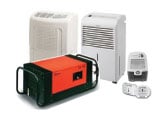
Dehumidifiers are unique allergy relief products because instead of just filtering allergens from the air, they actually help keep allergens from forming or multiplying in the first place. Endeavoring to achieve environmental control of allergens is largely a matter of keeping the air in your home clean. Allergens that become airborne are the most potent and pervasive allergy triggers because they’re invisible, inhaled, and trigger the immune system’s inflammatory response before it can be curbed. Allergy relief products like quality furnace filters and HEPA air purifiers are invaluable tools in helping to clear the air of dust mite allergen, pollen, mold spores, and other allergy triggers; but dehumidifiers create conditions that make it hard for certain allergens to thrive, thereby keeping them from ever entering your indoor air in the first place. Dehumidifiers and Mold
As the Public Health Department of North Carolina puts it, “All of the conditions needed for mold growth (food sources and appropriate temperatures) are present in the indoor environment with the exception of adequate moisture. Prevention of mold growth indoors cannot be achieved without proper moisture control.” So we see that, as the Environmental Protection Agency ( EPA) states: “The key to mold control is moisture control.” In addition to acting quickly when acute moisture problems (things like leaks or spills) present themselves, the EPA recommends “keep[ing] indoor humidity low. If possible, keep indoor humidity below 60 percent (ideally between 30 and 50 percent). Relative humidity can be measured with a moisture or humidity meter.” While a humidity gauge, or hygrometer, will tell you exactly how humid your home is, you can also look for visible signs. For instance, if you notice that condensation forms on your windows, this indicates that your home environment is too humid and that mold is likely to be a problem. Dehumidifiers address this issue by removing excess moisture from your indoor air. Dust Mites and Dehumidification
Dehumidification Improves Overall Indoor Air QualityUsing a dehumidifier improves indoor air quality in several ways, some of which are not immediately obvious. Firstly, making sure that moisture levels are within the proper range assures that mold and mildew are not given the opportunity to form and propagate. Secondly, dust mite populations are also kept under control when humidity levels are below 50 percent. Maintaining control over the amount of both mold and dust mites in your home has a huge effect on the quality of air that you and your family breathe. Mold spores are very light, and therefore easily airborne and very likely to be inhaled, as is dust mite allergen. Making sure that fewer of these allergens are present in the first place ensures that fewer of them will make their way into the air and into your body to incite an allergic reaction.
Choosing the Best Dehumidifier
The first thing you need to consider is where the moisture is a problem. Is it a small space like under a sink or in an enclosed bathroom? Out-of-control humidity is probably lurking in these areas during the winter when there isn’t much air circulation. If this is the case, a small dehumidifying unit like the Comfort-Aire 22 Pint Energy Star Portable Dehumidifier is an excellent choice. This compact and easy-to-use dehumidifier is energy efficient and effective at removing excess moisture from the air. Despite its compact size, the powerful 22-pint-per-day dehumidifier can also cover larger spaces, up to 1,500 square feet. This makes it an excellent choice for both small and large areas, such as laundry rooms, bathrooms, and more.
Home dehumidifiers occupy the middle of the dehumidifier spectrum, and there are several reliable brands to choose from. For basements and crawlspaces, Santa Fe dehumidifiers are an American-made brand with all steel construction and powerful, yet energy-efficient moisture removal capacities. Additionally, they can be built right into existing HVAC systems or used as standalone dehumidifiers in basements or crawl spaces. For use in living spaces, models like the Comfort-Aire 50 Pint Energy Star Portable Dehumidifier With Pump are a better option. Comfort-Aire models feature a sleek and modern design and are also energy-efficient. This year, take control of your home environment and invest in a dehumidifier. You will find that throughout the year, it reduces the amount of allergens in your home – a true boon to your efforts in achieving environmental allergen control success. And be sure to check out our other allergy and mold blog posts for more tips and tricks on how to stay healthy all season long! |

 The main benefit of dehumidifiers is that they keep moisture levels low enough to make it difficult for mold and mildew to form. During summer, in humid climates, this is imperative; we all know what a southeast summer can do to a basement that’s too humid. (An added perk of low-enough humidity levels in the summer is that they keep you feeling cool.) During wintertime, when ventilation is scarce because of cold temperatures, moisture that builds up in certain areas of the home is also of concern.