
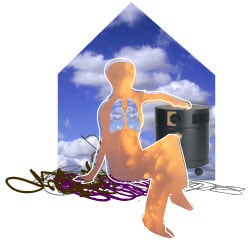
 Indoor air quality is a major health concern, and according to the Environmental Protection Agency (EPA), pollutant levels are two to five times higher inside the home than out. In more tightly sealed, modern homes, this can be as high as ten times the pollution levels found in outdoor air. The most common pollutants include airborne particles and particulate matter such as allergens, lung irritants, gases, tobacco smoke, toxic chemicals, and volatile organic compounds (VOCs).
Indoor air pollution contaminates the air we breathe every day. Just to give you some idea of how much microscopic particulate you actually inhale, on an average day, you typically inhale about two tablespoons of airborne particles. Since you draw in about 9 out of 10 breaths indoors, it’s easier to see where this particulate is coming from.
These pollutants put stress on your immune system, which can ultimately have a cascading effect and lead to other health problems. The effects of poor indoor air quality (IAQ) on an individual can vary greatly based on age and relative health. However, in general, poor indoor air quality leads to allergy symptoms, respiratory problems, and weakened immune systems, which can leave you more susceptible to colds, the flu and infection. Children are especially susceptible to the health risks of polluted indoor air since their lungs are smaller and they have a higher respiration rate throughout the day. If you experience allergy symptoms or asthma attacks in your home, you likely have poor indoor air quality. Other sources of IAQ problems may include poor ventilation, lingering odors, environmental changes like recent construction, new furniture, water damage, or a new pet.
Common Indoor Air Pollutants and Sources of Poor Air Quality
The most common type of air pollutant is simply house dust. Within any speck of visible dust, there can be hundreds of components, from the benign like dead skin cells, to the allergenic, like dust mites. Also contained is house dust are airborne particles like pet allergens (dander), pollen, and mold. These common allergens range in size from 0.3 to 100 microns, and while they are small enough to be 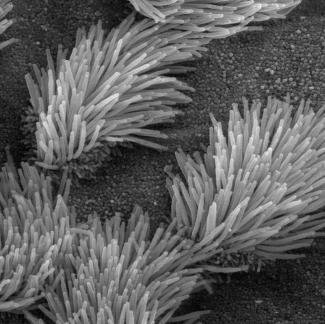 easily inhaled, they are too large to be easily exhaled. Instead the ultra-fine particles become trapped in the body’s natural defense mechanism, mucus membranes and cilia, and even though these two things work to keep particles out of the lungs, some ultra-fine particles can penetrate deep into the airways in the lungs.
Unfortunately, these pollutants are common in any home. Where there are people, there are most certainly dust mites, and mold spores are literally everywhere. Even in homes where there is no pet, dander can remain in the home for years, particularly cat dander which is smaller and “stickier” than other types of pet dander.
Other common indoor pollutants are simply household odors and gases. These pollutants include things like cooking smells, tobacco smoke, pet litter, chemical cleaners, fragrance, perfume, and indoor pesticides. Such chemicals and odors can aggravate allergies, asthma, and COPD.
Chemically reactive gases and VOCs are also responsible for poor indoor air quality. They are found in common household products like paints, cleaning supplies, disinfectants, and new carpets. Pressed wood tables and shelves as well as other furniture often use special glues or coatings that can contain VOCs. These chemicals are especially harmful for the young, the elderly, and the chemically sensitive. They can be hazardous to your health if they are present at high enough levels, or if your home is poorly ventilated. VOCs can cause symptoms like headaches, nausea, and throat irritation, and many VOCs are known carcinogens.
Solutions to the Problem of Indoor Air Pollution
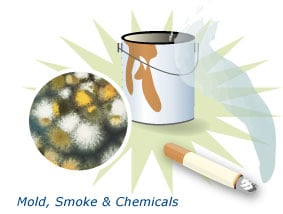 With newer homes being so tightly sealed for energy efficiency, this array of indoor air pollutants tend to simply accumulate in the home. The EPA suggests three basic methods for improving indoor air quality:
- Control the source of air pollution.
- Improve ventilation.
- Use an air purifier.
Your first step should be an attempt to control the source of air pollution. If the pollution stems from something like mold, smoke, or chemical off-gassing, it may be possible to remove it from your home. Mold can be removed and the humidity that allows it to flourish, reduced. Smoking can be done outdoors. New furniture can be allowed to air out. All of these can make a big difference in stopping pollution at its source. However, some indoor air pollutants, such as dust and pollen, are too pervasive, and you cannot always get rid of the sources. Unfortunately, in instances like these, more dramatic steps, like replacing the carpet with smooth flooring, are often your best route for reducing the allergen, or at the very least, making it easier to remove them.
Better ventilation will improve your indoor air quality if the offending pollutant is a chemical or gas. In this case, bringing fresh air into the home can be very helpful. However, many indoor air pollutants originate outdoors, so opening a window on a high pollen-count day or in a smoggy city may not be the best idea. When conditions are better for these things, allowing your home to “breath” or air out can make a difference.
The third step suggested by the EPA is to use a HEPA air purifier. With so many types and brands of air purifiers on the market, its pretty easy to find one that is well-suited to your home’s particular situation. We recommend HEPA air purifiers from Austin Air, AirPura, Aeris Health, Blueair, Airgle, Honeywell, NQ Clarifier, and Amaircare. A quality HEPA air purifier can work wonders for your IAQ.
How HEPA Air Purifiers Can Improve Your Health
A good HEPA air purifier can help improve home or Commercial Building Indoor Air Quality and rid your air of allergens, odors, chemicals, and many airborne disease-causing agents. Even if you’re not sick now, if you continue to breathe polluted air, you can experience detrimental health effects in the future. Many VOCs, for example, are known carcinogens that are likely to cause cancer after continuous exposure. When you purchase a quality air purifier, you will notice the difference. The air will smell fresher, and you will breathe better and sleep better.
Air Purification Technologies
 HEPA Air Filters
HEPA stands for High Efficiency Particulate Air. A HEPA filter removes airborne particles like pet dander, mold spores, and dust, capturing 99.97% of all particles 0.3 microns and larger. An easy way to think about this is if 10,000 particles pass through the HEPA filter, only 3 can escape. The U.S. Department of Homeland Security recommends HEPA air purifiers because they are highest, current standard in air filtration, outside of highly specialized, expensive systems. In our opinion, a HEPA filter is a necessary requirement for a quality air purifier or for someone with moderate to severe allergies or asthma, as well as those coping with COPD or more severe respiratory conditions. We recommend HEPA air purifiers from Austin Air, Aeris Health, AirPura, Blueair, Honeywell, and Amaircare.
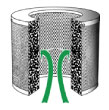 Activated Carbon Filters
Activated carbon removes gases, odors, and toxic chemicals. Carbon or charcoal is “activated” by treating it with oxygen, which opens up millions of tiny pores, creating a surprisingly large surface area. (One pound of activated carbon can have a surface area of 60-150 acres!) Chemicals, gases, and odors stick to the carbon and are adsorbed by its huge surface area, bonding to the surface through chemical attraction. The more carbon there is, the more gases and chemicals it can adsorb. Impregnated carbon is activated carbon that has been treated with an additional chemical, typically potassium iodide or potassium permanganate. These chemicals are known as chemisorbents or oxidizers, and they improve the carbon’s ability to handle VOCs and chemically reactive gases by broadening the range of chemicals that the carbon will adsorb, oxidize and remove. This is the second type of filtration we recommend since it remains the best in terms of targeting odors, smoke and VOCs.
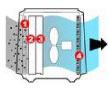 Electrostatic Filters
Electrostatic filters use some kind of electrostatic charge to attract pollutants. Electrostatic precipitators are air cleaners which charge particles as they pass over an electronic cell and trap the particles on oppositely charged collector plates. The advantage of electrostatic filters is that there are no filters to replace; the disadvantage is that the effectiveness of the air cleaner decreases very rapidly as the collector plates fill up with particles. Unless you are willing to wash them frequently, electrostatic filters may quickly become ineffective. Also, some electrostatic filters may generate unsafe levels of ozone, a powerful lung irritant.
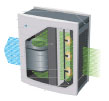 Charged Media Filters
Another type of filter which relies on electrostatic charge is the charged media filter. Charged media filters charge particles before collecting them in a traditional filter. They can trap very small particles, since they combine a filter and a charge. They can also run more quietly and economically, since the fan does not have to work as hard to draw the particles through the filter. However, like the example above, the charged-media filters lose their efficiency pretty rapidly, and all require more frequent filter changes. 3M air purifiers are a good example of these. They use the same principles except the filter media itself has a slight charge, similar to static electricity. Older types of units can emit ozone, but the newer and better ones on the market do not. If you are going to purchase this type of air purifier, make sure that it does not emit ozone. The best air purifier in this category is the ultra-quiet Blueair air purifier.
 Ionic Air Cleaners and Ozone Generators
Ionic air cleaners operate by drawing in particles and ionizing them (giving them a negative charge). Then the particles are released into the room, where they are attracted to positively charged surfaces like walls and furniture. Since the particles are never really collected by a filter, they stick to surfaces and make your house dirty; moreover, the particles can be dislodged and re-enter the air by simple movements like walking or sitting. Most ionizing air cleaners generate ozone, which is a documented health hazard and lung irritant.
Another type of machine sold as an air cleaner is an ozone generator. Obviously, these types of machines are not recommended for regular, residential use. The EPA has published several documents discouraging the use of ozone generators as air cleaners. Not only do they create a health hazard by emitting high levels of ozone, but they are also ineffective at cleaning the air.
Indoor Air Quality Conclusion
Most homes contain a variety of indoor air pollutants, including airborne particulates, allergens, household chemicals, and odors. We recommend an air purifier which combines a HEPA filter with some type of activated carbon filter; this combination will remove the widest variety of indoor air pollutants. There are other types of filtration technology available, but fewer long term studies have been completed regarding their efficacy. For more information, visit our HEPA Air Purifier Buying Guide and shop all of our home air purifiers for air pollution.