
 Steam cleaner buying guide content is essential for homeowners looking for an effective, chemical-free way to clean and sanitize their living spaces. Steam cleaners use high-temperature vapor to loosen dirt, dissolve grease, and eliminate bacteria, allergens, and germs from a wide range of surfaces. With many options available, understanding what features matter most can help buyers make a confident and informed decision.
Steam cleaners vary in design, power, and intended use. Some models are compact and portable, while others are designed for larger areas and extended cleaning sessions. The amount of steam pressure, heat-up time, and water tank capacity all play a role in overall performance and convenience. Choosing the right combination of features depends on how frequently the steam cleaner will be used and which surfaces need cleaning.
Surface compatibility is another important consideration. A quality steam cleaner should safely handle sealed floors, tile and grout, countertops, bathroom fixtures, upholstery, and other hard surfaces. Interchangeable attachments and accessories expand cleaning versatility and make it easier to target specific problem areas such as grout lines, crevices, or fabric surfaces.
Safety and ease of use are key factors highlighted in any steam cleaner buying guide. Features like controlled steam release, secure locking mechanisms, and durable construction help prevent accidental burns and improve user confidence. Maintenance requirements, including descaling and cleaning routines, should also be considered for long-term reliability.
By understanding the core elements outlined in a steam cleaner buying guide, consumers can select a tool that delivers effective cleaning, supports healthier indoor environments, and provides lasting value for everyday household use.
Steam cleaners have burst onto the scene in the past few years as a healthy and “green” alternative to cleaning with chemicals, detergents, and other agents that can harm your body and our environment. Using only water, the steam cleaner models we carry can be used to deep clean and sanitize your entire home. This Steam Cleaner Buying Guide covers the basics of steam cleaners, how they work, the technology behind them, how they can help you obtain a healthier kind of clean, and which models and brands will best meet your healthy home needs.
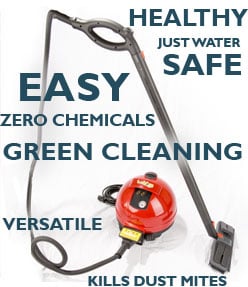 If you are an allergy sufferer or you have children that suffer from allergies and chemical sensitivities, a steam cleaner is a healthy way to deep clean a variety of surfaces without aggravating allergy symptoms. You and your family can live healthier and breathe better by using a steam cleaner regularly. Aside from price and budget considerations, the next big decision you need to make is in selecting a style of steam cleaner. There are three basic styles available, each suited for different tasks and priced accordingly.
Steam Cleaner Buying Guide – Three Types of Steam Cleaners
As the most versatile type of steam cleaner, vapor steam cleaners generally provide longer run times and have more features to enhance the overall effectiveness of steam cleaning in your home. A large percentage of vapor steam cleaners have a similar body style to canister vacuum cleaners and move freely across all types of smooth flooring. All come with a variety of accessories that allow you to clean and sanitize nearly any part of your home.
From the top of the line Ladybug steam cleaners to the popular Vapamore Primo, steam cleaners provide the best all-around green cleaning experience, while making your home safer and healthier.
Steam Mops are lightweight and easy-to-use alternatives to canister-style steam cleaners. Typically, steam mops, as their name suggests, are primarily used on smooth flooring, such as tile, linoleum, sealed hardwood, and laminate flooring. If you have children, they can play on the floor without the worry of getting chemicals on their hands, in their mouths, or in their eyes. If you are looking for an economical way to keep your floors clean and sanitized, a steam mop is an ideal solution.
Handheld steam cleaners are a quick and easy way to steam surfaces throughout your home without the hassle of using a larger unit with longer heating times.
Though not ideally suited for floors, handheld vapor steam cleaners work well in bathrooms, kitchens, and in other areas where you want to quickly sanitize or clean. Without the tiresome work of scrubbing, these steam cleaners can remove mildew, grit, and deposits left over from hard water in your bathroom. With the proper attachment, these steam cleaners can release wrinkles from your clothing and conveniently sanitize high-traffic areas that are often overlooked, such as doorknobs or sink handles.
These vapor steam cleaners use about 5-10% of the water in the steam, so most surfaces are completely dry within minutes of cleaning. You might also see this cleaning system referred to as “dry” steam cleaning, as it leaves behind minimal moisture.
Residential units heat water up to temperatures between 150° and 300° Fahrenheit (66-149° Celsius). For example, Reliable steam cleaners typically have a steam tip temperature of 245° F. The hot steam kills dust mites, mold, mildew, viruses, and other allergens on contact, as well as loosening most dirt and grime. For heavy soil, you may need to pre-treat with a natural surfactant or cleaner. The steam begins to evaporate almost as soon as it is on the surface, so you will not be left with soaking wet floors, counters, windows, and carpets.

Steam cleaners will loosen dirt and baked-on mess. Some steam cleaners come with towels or bonnets that attach to the cleaning head, helping to retain the steam heat and absorb loosened soil during cleaning. When steaming carpets or upholstered furniture, wait until the surface is dry (approximately 15 minutes) and then vacuum with a HEPA vacuum cleaner to remove all the dead dust mites and other dirt that the steam cleaner loosened and pulled to the surface.
Vapor steam cleaning can be used on almost any hard or soft surface, including: hardwood floors, countertops, bathrooms, windows, grout, tile, upholstered furniture, curtains, bedspreads, auto interiors, and even stuffed animals. Most steam vapor cleaners come with a variety of attachments for different types of cleaning jobs.
Advantages of Steam Cleaning
 Steam cleaners do not use detergent – just the power of steam to clean. Steam cleaners work so well because the heat from the steam emulsifies the dirt, and then the hot towel absorbs the soil.
Steam cleaning will definitely help with controlling dust mites. Dust mites die at 130°F, and the steam at the tip of most cleaners is usually over 200°F. Steam cleaning does not prevent dust mites from returning, so for consistent results, consider steam cleaning your mattress approximately every 8 weeks.
Origins of Steam Cleaners
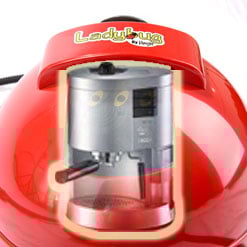 Steam cleaner technology was originally developed in Italy about 15-20 years ago from the same heating technology found in espresso coffee machines. This is also why some of the best steam cleaner brands available are made in Italy.
Residential units heat water up by using an internal boiler system. Ladybug, Reliable, and Vapamore all utilize a boiler method to create steam for their cleaners. Take care to note that when considering a steam cleaner, ensure the boiler tank is made of stainless steel. Stainless steel boilers are more resistant to corrosion and far surpass other metal boilers.
A newer method for heating water is by using a “flash” heating technique. Tankless water heaters have utilized this style of heating for years, and some steam cleaner manufacturers, such as Soniclean steam mops, have adopted a similar method for creating steam water vapor. Although this is found in smaller units, flash heating can still heat water to the necessary temperatures to kill microorganisms and effectively sanitize the entire home.
Steam Cleaners vs. Carpet Cleaners
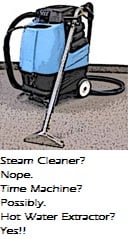 You may have used or rented a commercial “steam cleaner” to clean your carpets. The type of commercial-grade carpet cleaner that is most commonly rented or hired out is not a vapor steam cleaner like those we’ve been discussing. It is actually a hot water extraction machine. Hot water extractors use a combination of hot water and detergent to clean carpets and other fabric surfaces.
In the process, the carpeted surface is soaked or flooded with a mixture of water and detergent. Then it is sucked back up, much like a wet/dry vac. As much as 10-15% of the water can be left behind, and this can take hours or even days to dry.
Warm, wet conditions like these are the ideal environment for molds and mildews to form, potentially making your situation worse than before you started. This underscores the inherent difference in cleaning for appearances and cleaning for health. Most of us too often clean only for appearances but do little to actually deep clean or sanitize our homes. Using a hot water extractor will indeed make your carpets look better, but it cannot provide the deep, healthy clean that only a true steam cleaner can offer.
Best Practice when Steam Cleaning Carpets
If you are using vapor steam cleaning on carpet, follow with a HEPA vacuum cleaner after it is dry to remove the waste that the vapor steam cleaner loosened and released during cleaning. Most steam cleaners have no method, other than cloths or bonnets, to extract debris.
Once the soil is effectively loosened, a quality HEPA vacuum cleaner can put the finishing touches on your carpeted floor. On hard surfaces, the steam vapor dries in as little as a few seconds to a couple of minutes. We recommend experimenting with your steam cleaning a bit. Steam cleaning is a relatively new method for many of us, and it can take some time, as well as a bit of trial and error, to find the ideal combination of steam and accessories for cleaning your specific surface.
Steam Cleaning and Allergies
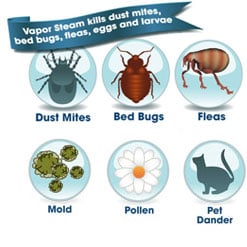 There are submicron particles such as dust mites, dust mite waste, pollen, dander, and other allergens and irritants trapped inside the pores of flooring and other hard-to-reach places of your home. Surface cleaners cannot extract these, and many cleaners cannot effectively neutralize and sanitize without a certain period of dwell time (time for the cleaner to soak).
However, vapor steam cleaners can pull and loosen debris and allergens, even those deep in the pores of even the hardest surfaces. The hot steam penetrates and loosens or removes this soil through a process of “heat transfer.” Much in the way extremely hot water can loosen baked on debris in pans, so to does powerful steam lift debris without the use of detergents or cleaners. As highlighted above, hot steam is lethal to dust mites. Tiny organisms, such as dust mites and mold, have very little protection against high temperatures. Dust mites absorb moisture and warmth directly through their skin, so high temperatures kill them instantly.
The cell walls of most microorganisms aren’t strong enough to withstand extremely high temperatures, BUT there is a reason why microscopic life is some of the most durable and earliest forms of life. Some types of mold, bacteria, and viruses are naturally more resistant or reside under a protective “biofilm.”
To address this, Advanced Vapor Technologies developed the Ladybug steam cleaners with TANCS. This system goes beyond heat and actually crystallizes naturally occurring minerals in tap water. These crystals, combined with the steam vapor, work together to kill resistant microorganisms. The crystals penetrate biofilms, weaken cell walls, and give the heat a better chance actually to kill heat-resistant microbes.
For allergy and asthma sufferers, effectively removing or neutralizing allergens can be a big relief, and steam cleaning is a safer and healthier way to accomplish this.
Additionally, steam cleaners can help kill bed bugs and aid in eliminating them from a home. While you will be very unlikely to actually see a bed bug out in the open during the daylight hours, if you know where to look, you can find them. The steam is hot enough that the heat will kill bed bugs, their larvae, and eggs. Finding them is often the most difficult part, but once you do, disposing of them is easy.
Why Steam Cleaning Is Better Than Detergents & Chemicals
 Cleaning with detergents and bleach has several disadvantages, including fumes and chemical vapors, hazardous residues, chemical burns and irritation as well as disposal of potentially harmful product. By eliminating them, you can make significant improvements in your health. The use of an effective home steam cleaner means no corrosive bleach, ammonia, or lye, but instead, only water and heat. By eliminating these chemicals, allergy, asthma, and MCS sufferers reduce their exposure to these chemical irritants.
Steam cleaners provide an advantage in that they use no chemicals and can actually remove chemical residue left behind from previous cleanings. Additionally, detergents only clean the surface, and all surfaces, whether hard or soft, are porous. Superheated steam actually penetrates these pores, deep cleaning and sanitizing through heat transfer. Another huge advantage of vapor steam cleaning is that the hot steam vapor is naturally sanitizing without using any chemicals. The vapor destroys many mold spores, germs, viruses, dust mites, and bacteria. It can be like a magical weapon in the war against germs when used in the kitchen and bathroom.
There are times when you will need to pre-treat the surface with a cleaner. We recommend using a natural one before using the steam cleaner if there is heavy soil present. The steam will boost the effectiveness of the cleaner, and natural surfactants leave less residue and generally lack the chemicals you are trying to avoid.
Steam Cleaners – Important Features

The four primary features/functions to concentrate on when researching your new steam cleaner are continuous water refill, heat-up time, steam pressure, and the steam volume control. These four features really separate the great machines from the entry-level steam cleaners.
- Continuous RefillThe continuous water refill feature means that you can add water to the unit while you are in the middle of your steam cleaning job. These systems have two tanks, a reservoir for cold water and a boiler that actually converts the water to steam. Without the reservoir, boiler-style steam cleaners have to reheat before you can resume cleaning. Continuous fill steam cleaners pump cold water from the reservoir to the boiler for heating, and when the reservoir is empty, an indicator light or audible alert notifies you that it’s time to refill. Once you refill, you can return to steam cleaning immediately, as the boiler retains the heat and water it had inside while you fill it. For commercial use, the water refill option is a necessity.
- Heat-Up TimeWater heat-up time is another important feature. Most of the steam cleaner models that we offer heat within 7-15 minutes. Some of the more advanced units can heat up the water in about five minutes. A faster heat-up time means that you can tackle your cleaning job quicker, and you can use your steam cleaner more often. In reality, a few minutes here or there may not seem like much, but for most people, being pressed for time and impatient, anything that delays their goal can lead to many not even trying to begin with. Besides, you won’t find many people who are going to volunteer to wait for the time to clean or sanitize their homes. Just remember to wait for the steam-ready light on your machine to indicate when the steam is at the optimal temperature and pressure for cleaning. Be patient, and you will find better performance results.
- Steam PressureOther features that are important have to do with the steam pressure generated by steam cleaners. There is a common misconception about steam cleaners, and many people equate higher steam pressure with better performance. While a higher pressure does lend itself to a better quality steam, higher pressure is… highly overrated (bad pun, we know). No, what is most important is consistent pressure. Pressure and heat inside the boiler work together to create steam. The higher the pressure, the quicker steam will be produced. Consistent pressure means consistent performance, both in terms of steam production and the volume of steam available at the point of cleaning (the tip, nozzle, or tool). If the pressure swings wildly, then you can expect the quality of steam being produced by your unit to vary widely as well. Better models come standard with a steam pressure gauge, allowing you to ensure that your steam cleaner maintains a good, steady pressure. Besides, the boilers in steam cleaners are low-pressure boilers. So remember, a steam cleaner isn’t a pressure washer. Consistency is the key.
- Steam Volume ControlMost models have steam volume control on the handle, and this feature lends itself to a quicker and easier transition when steam cleaning across a variety of surfaces. The ability to control the steam volume indirectly gives you control over several things, including the amount of steam coming out and the amount of moisture that will ultimately be left behind. This is a convenient feature that adds to the overall ease of use.
Steam Cleaner Operation and Maintenance
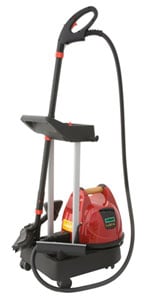 Operating a steam cleaner is not difficult, but there are some safety precautions and sound advice to keep in mind before you get started. You should always read the owner’s manual carefully before using one of these machines. The hot steam that is released can cause damage to items and injury. Depending on the steam cleaner model you purchased, the steam temperature can range from 230°F to 320°F.
If you have a doubt about cleaning a type of fabric, you should do a test in an inconspicuous area. Be careful when you are filling with water. You do not want to overfill the boiler or soak the electrical parts of the steam cleaner.
Some units are designed so that, should you overfill them, the water simply rolls off the exterior of the unit, but be sure to use the included fill cups whenever possible. Never clean electronic appliances with steam, as this could be a safety hazard. Lastly, never put detergents, perfumes, or any other chemicals in the water tank.
*Please note that when the steam generator heats up on these units, there is air that is trapped inside the unit. When the steam-ready light comes on, you must release this air from the tip for a few seconds before the steam can flow from the steam tip. Doing this also drains away any water that may have cooled in the lines since your last use, and in some cases, any leftover moisture that may be left from when the unit was quality control tested before leaving the manufacturer. Always wait for the steam-ready light for the most effective use.
Maintaining your steam cleaner is a fairly easy process. Always switch off and unplug the steam cleaner before performing any maintenance on the unit. Every three months or after 15 uses, it is a good idea to drain the boiler unit of any water. This advice is recommended for nearly all canister-style steam cleaners. For less expensive steam mops, it is recommended to drain the tank(s) and allow them to dry after each use. You never want to store your steam cleaner in a cold place that is likely to freeze or expose the unit to cold temperatures for extended periods.
Occasionally, mineral scale can build up inside the boiler system. Some steam cleaners have built-in methods for eliminating or removing scale (like the Ladybug steamers with TANCS), but in less expensive models, this is rarely the case. To remove scale, the system can be flushed with a mixture of water and baking soda. More on this can be found on our steam cleaner maintenance page.
Lastly, stick with regular tap water. It’s generally the least expensive, and descaling costs little. If your water is particularly hard (high in mineral content), you can mix your tap water with 50% distilled water to reduce the overall mineral content. We recommend that you avoid softened water, and here is why: Traditional water softeners use ionized salt to remove/replace minerals found in hard water. Over time, the sodium (salt) from water softeners can damage the boiler system and internal components, shortening the lifespan of your steam cleaner.
Here are some quick troubleshooting tips to go through before calling the manufacturer for help:
- Is there electricity supplied to the steam generator? Check the outlet with another appliance.
- Is the steam generator “ON” switch on and the light on?
- Is the steam ready light “ON” and/or is the beeper sounding?
- Is the no water light blinking because the tank is out of water?
- Is the pressure gauge showing a “ready” indicator?
- Is the flexible hose and the cleaning attachment correctly connected?
Steam Cleaner Buying Guide – Other Considerations
 Energy Usage
Like all appliances, different steam cleaners use different amounts of energy for operation. Typical steam cleaners can use anywhere from 1000 to 1800 watts. (For comparison sake, a typical lamp uses about 60 watts, while a typical computer uses about 365 watts). Wattage will vary widely depending on the heating system employed (boiler vs. flash) and the number of heating elements used in the boiler-style systems.
 Noise Level
All of our steam cleaners are relatively quiet, but they will still make some noise. Most of these units utilize technology and high-quality components to minimize noise levels. The steam pressure coming out of the tip of the steam gun will sometimes make noise as the pressure is released, but aside from this, all units are much quieter than any vacuum.
 Easy to Use
Most steam cleaners are designed to be very user-friendly. They have very few moving parts that need maintenance. Almost all of these machines come with casters (wheels) and are relatively lightweight for improved mobility.
For example, Ladybug Steam Cleaners feature fingertip controls, a flexible hose, low water light and noise indicators, a pressure gauge, and a splash-proof design. These same features can also be found in several of the Reliable steam cleaners we carry as well.
Look for these steam cleaner features that will make your cleaning regimen easier and faster:
- Fast heat-up time
- Continuous water refill ability
- Steam pressure control on the handle
- PSI – steam pressure gauge
- Boiler tank capacity
- Quality accessory kit
 Manufacturer’s Reputation
Residential steam cleaners are still a relatively new product in the U.S. marketplace. Like any other home appliance (ie, dehumidifier or air purifier), some steam cleaner manufacturers make a better product than others. A manufacturer’s reputation and the experiences of past customers deserve consideration in your decision. You should pay careful attention to product reviews and Achoo reviews that AchooAllergy.com staff members post.
Certain manufacturers and products are highly respected in the industry for a reason. The same sentiment goes for products that have garnered less respect. So, whether it is a review or award issued by a nationally recognized magazine or simply an excellent review from someone just like you, it pays to do your research before buying a steam cleaner.
In general, we recommend looking for Italian or European-made units. Often, inexpensive Asian manufactured steam cleaners use less durable plastic for the shell and inferior internal components. Reliable has more recently taken the approach of sourcing different components for some machines from various locations. This can result in things like the shell and assembly taking place in East Asia while the internal circuitry and boiler were actually made in Europe or the U.S. (a middle ground approach) So yes, while you can certainly find a $100 steam cleaner, don’t expect the same performance or longevity as one that is Italian made or 3X the cost. Keep this truism in mind – you get what you pay for.
 Warranty
For each steam cleaner, a warranty is listed at the bottom of the product page. Almost all of our steam cleaners come with a one-year limited warranty on the parts. A one-year warranty is the standard in the industry. However, most of the boilers on these units are made of stainless steel. The boiler warranties can range anywhere from 3 years to 8 years, depending on the steam cleaner model. Most recently, Reliable boilers have been upgraded to a full Limited Lifetime Warranty. When researching the warranty, consider what it covers, including parts, the boiler, the steam tank, and the outer shell. Warranties are your insurance policy against defects and malfunctions, so it is prudent to take these into account when choosing a steam cleaner for your home. Most of the steam cleaners that we sell can be returned and fixed by the manufacturer.
If you found this steam cleaner guide helpful and are ready to buy steam cleaners online, Shop All Home Steam Cleaners or learn more from any of these additional resources.
✔ Steam Cleaner FAQs
✔ New to Steam Cleaners?
✔ Top Five Things to Consider When Buying a Steam Cleaner
✔ Steam Cleaner Maintenance Guide