
Basement dehumidifier choice plays a major role in protecting your home from moisture damage, mold growth, and the long-term effects of high humidity. Basements naturally collect excess moisture due to cooler temperatures, limited airflow, and direct contact with surrounding soil. These conditions create an ideal environment for mold, musty odors, and structural issues if humidity isn’t managed properly. Selecting the right dehumidifier for your basement begins with understanding how severe your moisture problem is and which features actually make a difference in long-term performance.
One of the first considerations is capacity. A lightly damp basement may only need a mid-range unit, while a large or chronically wet space often requires a high-capacity, continuous-operation model designed for heavy moisture removal. Energy efficiency also matters because basement units typically run for extended periods. Options with smart humidity sensors, auto-restart, and low-temperature operation help maintain stable humidity levels without unnecessary energy use.
Drainage is another crucial factor when selecting a basement dehumidifier. Since basements sit below grade, units with built-in pumps, gravity-fed drainage, or continuous drain hose connections provide the most reliable long-term solution. Filter quality can also influence performance by capturing dust and improving basement air quality as the unit runs.
Durability, noise level, and warranty terms help determine which unit will deliver dependable moisture control year after year. A well-chosen dehumidifier not only prevents mold growth and protects stored belongings but also supports the overall structural health of your home. With a clear understanding of your basement’s moisture level and the features that matter most, you can confidently select a dehumidifier that keeps your space dry, safe, and comfortable.
There’s no denying that a dehumidifier is a helpful way to improve your home’s air quality. These small but mighty appliances work by reducing the amount of moisture in the air, and if you’re familiar with allergens, you know that high-moisture environments are exceptionally hospitable to the growth of stubborn mold and mildew. Investing in proper moisture control is especially important if you’re considering basement remodeling, since a dry, clean space makes for a healthier and more comfortable living area.
Additionally, the best basement dehumidifier can effectively help ward off moisture-loving dust mites that can trigger the most uncomfortable allergy symptoms. These allergens may be the reason why you often have a stuffy nose, itchy eyes or experience regular sneezing.
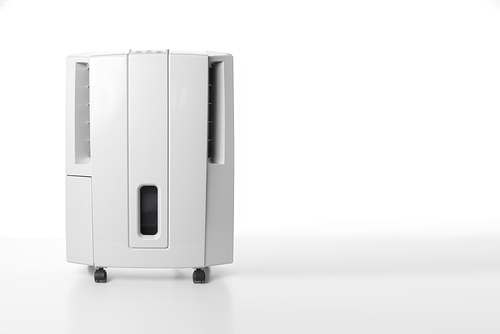
However, not all dehumidifiers are created equal, and some models are better suited for basements than others. Achoo Allergy is on hand to help you choose the right basement dehumidifier, based on your unique needs, space, and personal preferences. Use this handy, in-depth dehumidifier selection guide to ensure that you’re purchasing a model that will effectively remove the moisture from your basement. Regardless of which model or style you choose, you want to make sure that you’re keeping your basement at the ideal humidity range of 40 to 50 percent.
Consideration Number 1: Size of the Room
Generally speaking, basement dehumidifiers are classified by their coverage area in square feet. You will want to choose a dehumidifier with a coverage range that most closely aligns with the size of your basement. To determine the area that you want to dehumidify, make sure to measure your entire area—including stairways, crawlspaces, and closets—in square feet. Get advice from basement waterproofing contractors to handle moisture and keep your basement a dry and comfortable environment. If you encounter any problems, ask for help with a basement leak repair to avoid damage.
You can usually find a dehumidifier size that allows you to install a single model to cover your entire basement. With that being said, you can double or triple up on dehumidifiers if you prefer a smaller coverage area. In fact, we recommend adding a dehumidifier to each room to ensure maximum moisture absorption.
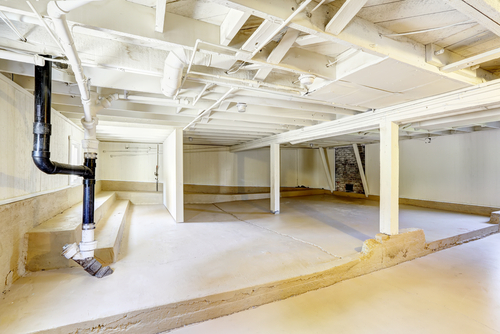
It is also important to note that some manufacturers use cubic feet rather than square feet to determine coverage area, but this isn’t universal. As a general rule, we recommend installing a 50- to 70-pint dehumidifier in each room of your basement. Rooms with lower levels of airflow may require a larger size or two dehumidifiers per room.
Consideration Number 2: Moisture Level
When choosing the appropriate basement dehumidifier, room size isn’t the only consideration when it comes to selecting the right capacity. If your space is moderately damp—i.e., there is a slight musty odor but minimal moisture on the floor—then you will undoubtedly be able to get away with a model that coordinates with your square footage. However, suppose you’re dealing with high moisture and have noticed water buildup on the floor or can tell that clothing and items feel wet to the touch. In that case, you may consider choosing a model designed for a larger space that doubles as a dehumidifier.
Consideration Number 3: Whole Home vs. Portable Dehumidifiers
In some climates and situations where extreme, uncontrollable moisture is a concern, we highly recommend investing in a whole-home dehumidifier. Unlike portable styles, whole-home dehumidifiers allow you to automatically control the humidity throughout your home.
These units are up to four times more energy-efficient than their portable counterparts, but are significantly more expensive upfront. For additional information, reference our guide to Whole Home vs. Portable Dehumidifiers.
Consideration Number 4: Water Removal Preference
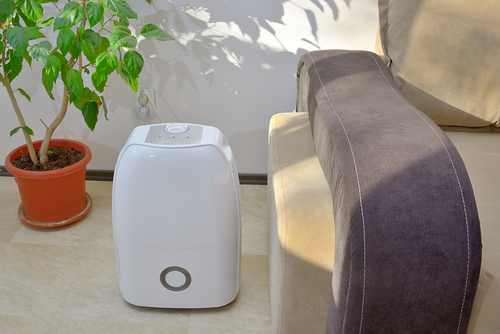
Before you select a dehumidifier, you will want to consider the two most common water removal options: pumps and gravity-powered elimination dehumidifiers. “Porting” dehumidifiers—or those that use gravity to remove water—are a convenient option. These work by dripping the water via a drain hose into a nearby sink or drain via gravity, eliminating the need to supply a water reservoir.
Pumping dehumidifiers are a bit more convenient because they automatically expel the water in spaces where gravity isn’t a plausible option. Most of our dehumidifiers come with either an extra or integrated pump, so you don’t have to worry about manually dumping the water.
Consideration Number. 5: Additional Factors
There are a few additional factors to consider when selecting a basement dehumidifier. You want to consider things like whether or not noise is a concern (for example, if a running machine in the basement won’t bother you upstairs, you don’t need to worry about noise levels), along with energy consumption.
Dehumidifiers range from 50 to 800 watts, with higher wattage levels consuming more energy and potentially increasing your energy bill. We highly recommend investing in an Energy Star-certified dehumidifier to ensure that you’re keeping your energy consumption relatively low while keeping your basement dry.
For more information, be sure to reference our Dehumidifier Buying Guide.