
- What do UV Lamps do?
- What about ozone?
- What are charged media filters?
- How loud are air purifiers?
- How often do I need to replace the filter(s)?
- How do I know when to replace the filter(s)?
- Should I run my air purifier all the time?
- Will the air purifier clean the air for my whole house?
- Where should I put my air purifier?
- Am I going to see a significant difference on my electric bill?
- How much does it cost to operate an air purifier?
- Whats the best air purifier for someone with asthma?
- What are the differences in your air purifiers?
- What else can I do to clean the air in my house?
Air Purifiers FAQ
Why do I need an air purifier?
An air purifier will improve your health. Americans spend about 90% of their lives indoors. The Environmental Protection Agency (EPA) estimates that, on average, indoor air is two to five times more polluted than outdoor air. This includes common allergens like pollen, dust mites, pet dander, and mold spores but also exhaust emissions, smoke, VOCs, and other chemical vapors. AchooAllergy has a wide variety of air purifiers including Austin Air, Blueair, AirPura, Honeywell, and Whirlpool.
What causes indoor air pollution?
Modern homes are sealed tightly for energy efficiency. Energy efficient homes are good for your electric bill, but bad for your allergies. Those tight seals trap all kinds of contaminants in your home: pollen that blows in when a door or window is opened, cat dander that hitches a ride on clothing, chemicals and irritants released by cleaners or cooking,and volatile organic compounds (VOCs) which off-gas from furniture and carpet. Pollutants like tobacco smoke, pollen, mold, dust, and animal dander can cause asthmatic and allergic reactions, making homes unpleasant and unhealthy for allergy and asthma sufferers. Other contaminants, like chemically reactive gases and VOCs, can cause allergic reactions with some being carcinogenic and/or toxic.
Even if your symptoms are not noticeable now, that doesn’t mean the air inside your home is clean. According to the EPA, health affects may show up only after long or repeated exposure; therefore, it’s a good idea to clean the air in your home now, especially if you have children. Prolonged exposure to airborne allergens and pollutants have been linked to allergies (and more serious health problems) developing later in life.
HEPA stands for High Efficiency Particulate Air. HEPA air purifiers were originally developed by the Atomic Energy Commission to capture radioactive dust particles. Our HEPA air purifiers will not filter radioactive particles, but they will take care of common allergens like pollen, mold spores, dust, etc. By definition, a HEPA filter are tested to certify that they remove at least 99.97% of all particles 0.3 microns and larger. Why the 0.3 micron size? This is the size of particle that scientists and testing have deemed to be the “most penetrating particle size”. This means that of all particles, including those larger AND smaller, particles that are 0.3 microns have been shown to be the most difficult to trap, and thus, this is the standard by which HEPA filtration is measured.
How do HEPA air purifiers work?
So how do air purifiers work? Typically, dirty air is drawn into an air purifier, and in most HEPA air purifiers, a washable pre-filter traps larger and visible particles. Air then usually passes through a HEPA filter. HEPA filter media is composed of millions on very thin fiberglass fibers that combine to form a material that feels a bit like paper. During the manufacturing process, the best HEPA filter media is rolled and pleated while the material is warm, to prevent any cracking or terms. As as passes through them, allergens of all different sizes, such as pollen, animal dander, mold spores, and dust get trapped in the tiny filaments of the filter. Many HEPA air purifiers also contain a carbon filter to capture chemicals, odors, and gases. Once the dirty air has passed through all the filtration stages, the now cleaned air is sent back into the room.
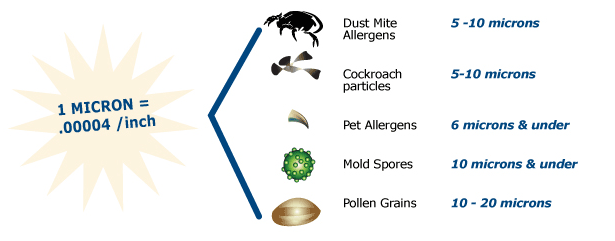
Air purifiers are designed to eliminate impurities in the air, even those impurities which are so microscopic that they are invisible to the naked eye. Microns are is the common measurement term used for these microscopic airborne particles. One micron is 1/25,000 of an inch. To give you an idea of how small this is, dust mites average around 200-300 microns, and a grain of sand can be over 800 microns!
This is a common air purifiers FAQ, particularly for those considering an Austin Air purifier. HEGA stands for High Efficiency Gas Absorption. A HEGA cloth is an advanced military carbon cloth that is specifically designed for the filtration of areas polluted by smoke, odors, gases, smog, and fumes. These types of filters are specific to certain Austin Air models, such as the Austin Air Allergy Machine and the Austin Air Baby’s Breath air purifier. Generally, this type of filter media doesn’t last quite as long as a traditional activated carbon filter (with granular carbon).
What is an activated carbon filter?
Activated carbon and charcoal filters excel at adsorbing odors and gases and neutralizing smoke, chemicals, and fumes. “Adsorb” is not a typo; “adsorption” occurs when materials attach, through chemical attraction. They bind with the surface of the carbon. Activated carbon has been treated with oxygen, opening up millions of pores in the carbon. There are so many of these tiny pores that one pound of activated carbon has a surface area of 60 to 150 acres! This huge surface area makes it ideal for adsorbing gases and odors. Chemicals and gases are too small to be trapped by a HEPA filter, but most bond readily to the enormous surface area in activated carbon. The bigger the carbon filter, the larger the volume chemicals it will be able to adsorb and the longer it will keep on working. Activated carbon can adsorb roughly 50-65% of its weight in gases, smoke and other chemical vapors. When it’s full, it cannot adsorb any more and has to be replaced. 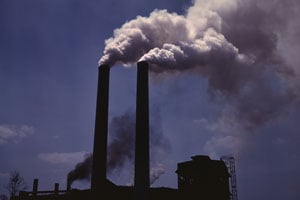 Activated carbon filters are derived from a variety of base substances including anthracite and bituminous coal, sawgrass, coconut shells, and even rayon.
What is an impregnated carbon filter?
Impregnated carbon filters contain an additional chemical (a “chemisorbent”) to eliminate certain chemicals like VOCs. These are often oxidizing agents like potassium permanganate, potassium iodide, and potassium hydroxide. The addition of these broadens the filtration range, allowing carbon filters to remove a wider variety of chemical vapors and pollutants by either trapping them or oxidizing them, breaking them down into smaller, inert components like water vapor and carbon dioxide.
CADR stands for Clean Air Delivery Rate, and it is a measurement developed by AHAM, the Association of Home Appliance Manufacturers. The CADR measures how much clean air an air purifier delivers to a room in cubic feet per minute (CFM). This test is helpful in determining which air purifier to purchase, because it can give you a baseline filtration number to compare among different air purifier models. However, it is only one of many factors. It is also worth noting that many air purifier manufacturers who are not a paying member of AHAM do not submit their products for testing. One fault with the testing is that while it is conducted according to ANSI standards, it can actually rate ozone generators very highly (as they cause particulate to settle out of the air and stick to walls and floors). Another drawback is that it shows little by way of filtration efficiency beyond a 72 hour period, so strong performers in the short term can have filtration that dramatically falls off after only a few weeks or months but can still have a high CADR.
ACH stands for Air Changes per Hour. This number, also known as the ACH rating, tells us how frequently the air purifier can exchange all the air in a given room. For example, if the purifier has a ACH rating of 6 for a 20′ x 20′ room, then it is capable of exchanging all of the air in that room 6 times every hour. If you have allergies or asthma, you want an ACH rating of at least 4 and preferably 6 or 8.
Why doesn’t AchooAllergy.com sell ozone generators or ionic air cleaners?
Ozone generators are just as the name implies, machines that produce massive amounts of ozone, and ionic air cleaners also produce ozone as a by-product. Ozone is a molecule composed of three oxygen atoms; it’s the same molecule that makes up the “ozone layer” of our upper atmosphere. Stratospheric ozone is a good thing because it protects us from dangerous UV rays; however, ozone in the air we breathe can be harmful to your health. The U.S. Environmental Protection Agency (EPA) states that “relatively low amounts can cause chest pain, coughing, shortness of breath, and throat irritation. Ozone may also worsen chronic respiratory diseases such as asthma and compromise the ability of the body to fight respiratory infections.”
The EPA warning continues: “Available scientific evidence shows that, at concentrations that do not exceed public health standards, ozone is generally ineffective in controlling indoor air pollution.”
 The EPA advises the public to “use proven methods of controlling indoor air pollution,” which include eliminating or controlling sources of pollution, increasing outdoor air ventilation, and using proven methods of air cleaning, such as HEPA air purifiers.
Additionally, the American Lung Association (ALA) agrees that “ozone is a potent lung irritant and exposure to elevated levels is a contributor to the exacerbation of lung disease; it is especially dangerous for persons with asthma and other chronic lung diseases, children, and the elderly.”
The ALA recommends against the use of ozone generators because “ozone generators, negative ion generators, and certain other electronic air cleaners that are not listed by the FDA, or cannot otherwise prove that their ozone emission levels are lower than 0.05 ppm, may produce levels of ozone recognized as unsafe for humans and are not recommended for use in occupied spaces because of the risk of generation of ozone.” The ALA also reports that exposure to elevated ozone levels can cause some children to become asthmatic.
Consumer Reports, the National Institute of Occupational Safety and Health (NIOSH), and the U.S. EPA concluded that tabletop and room unit ozone generators are not effective at improving indoor air quality.
Many of our competitors sell ozone generators and ionic air cleaners, but we want to help you breathe better with products that are scientifically proven to work safely and effectively and we would never sell a product that may be harmful to your health. That is not a chance we’re willing to take.
What are electrostatic precipitators?
Electrostatic precipitators use electronic cells to charge particles within the purifier and immediately trap the impurities on collector plates. The main advantage with this type of air purifier is that the collector plates never have to be replaced; they can be easily washed in the dishwasher. The drawbacks are that if the collection plates are not cleaned frequently, they quickly lose efficiency. Be aware that some electrostatic precipitators can generate ozone.
What is Photocatalytic Oxidation?
This is a relatively new process where UV light irradiates a surface covered in titanium dioxide. This produces hydroxyl radicals which oxidize and break apart the bonds of VOCs. These radicals continue to break apart the bonds of VOCs and its derivatives until ultimately, the end products of water vapor and carbon dioxide are all that remain. This process has shown promise in effectively removing VOCs and other chemicals. As a note, the oxidation process can take several stages, so as large VOCs are broken into smaller and smaller compounds, the entire process is not always accomplished all at once. In terms of efficacy, these are the types of compounds PCO can target, ranked in terms of most effectively and quickly oxidized to least effectively or more slowly oxidized: alcohols and glycol ethers; then aldehydes, ketones and terpene hydrocarbons; then aromatic and alkane hydrocarbons; and finally halogenated aliphatic hydrocarbons. PCO can  effectively neutralize compounds in all these categories, taking more time for aliphatic hydrocarbons than alcohols. Think of it as taking apart Legos. Disassembling a large structure takes more time than reducing a simpler structure into its most basic building blocks.
UVC lamps are found commonly in food prep areas, hospitals and places where microbes need to eliminated or dramatically reduced. Commonly, these lamps emit UV-C wavelength light that does a couple things. First and foremost, UV light can neutralize or kill microbes. UV light disrupts the cell walls and DNA of bacteria and viruses, often killing them or rendering them unable to reproduce. UV light can also combine with other elements and actually break the bonds that hold chemicals like VOCs together. This oxidizing process is what occurs with photocatalytic oxidation, described above. UV lamps must be of high quality and specifically UV-C type. Other types of UV light can emit detectable levels of ozone, a lung irritant. A good way to check whether or not a UV lamp or UV product is a good one – reference it against the California Air Resources Board (CARB). CARB approves consumer products for use in the state of California and more importantly, they actually use more stringent testing standards and levels than what the EPA currently uses. So, it is a good bet that if an air purifier has a UV lamp is is CARB approved, you won’t have to worry about it emitting ozone.
People may not realize it, but we are exposed to ozone every day. Any electronic device, and device powered with electricity will produce ozone. From your TV and mobile phone to your refrigerator and vacuum, nearly every single device that uses electrical current will emit some small quantity of ozone. The amount of ozone these devices produce is often not even detectable and not a problem for people with respiratory problems or asthma. With air purifiers, there is a specific type of technology, ozone generators, that are still in use, but almost exclusively in commercial applications. “Ozone shocking” a space is when an ozone generator is placed in a space and allowed to run, filling the space with high levels of ozone. The upside to this is that it can dramatically improve air quality, in terms of removing particulate and pollutants from the air. The downside is residual ozone can irritate lungs and airways. Avoid any air purifier that uses ozone generation as its primary filtration technology. And as mentioned above, check the CARB site or contact the manufacturer of an air purifier to confirm that the product is indeed CARB certified and avoid any worry of ozone generation. No air purifier that AchooAllergy.com currently offers produces any measurable amounts of ozone.
What are charged media filters?
Charged media filters work the same way as electrostatic precipitators, but they collect particles on traditional fiber filters instead of plates. The advantage of these filters is that they are able to collect very small particles, sometimes as small as 0.1 microns, through a combination of a filter and an electrostatic charge. The disadvantage is that, like the electrostatic precipitator filters, charged media filters lose their efficiency fairly quickly, and they can require more frequent filter replacements compared to HEPA air purifiers. These types of units can emit ozone, but most do not. If you are planning to purchase this type of air purifier, make sure that it does not emit ozone.
 Some air purifiers, such as the Blueair and AirPura, are extremely quiet, while nearly all can be quite loud when operating at high power. If possible, ask for a demonstration before you buy your air purifier, and for the majority of air purifiers we offer, there are decibel ratings on the individual pages.
How often do I need to replace the filter(s)?
If you are buying a HEPA air purifier, don’t forget to check and see how much replacement filters will cost. If your unit includes both a HEPA filter and a carbon filter, or other combinations of filtration media, they will probably need to be replaced separately, and they may last for different periods of time. Typically, HEPA filters can last anywhere from six months to five years. These times will vary according to who manufactures the product, the total surface area of the HEPA filter media, and the conditions in which you operate your HEPA air purifier. In general, cheap air purifiers require replacement annually, with more expensive brands recommended 3-5 year replacement intervals.
How do I know when to replace the filter(s)?
 Luckily, you can take the hassle out of filter replacements by joining the Clean Air Club, our free filter replacement reminder program. Well do all the work for you and automatically remind you when its time to replace your filter(s). Otherwise, some air purifiers will have integrated timers that will alert you when a set period of time has passed (coinciding with the manufacturers suggested replacement schedule). A few air purifiers will provide more specific replacement times by calculating the total time the machine has been operating vs. the the fan speed and determining when the filter needs to be replaced based on that.
Should I run my air purifier all the time?
We recommend that you run your air purifier continuously for optimum operation. If noise is a consideration, we generally recommend running it at higher speeds while away for work or school then turning the fan speed down to quieter levels before bedtime or when you get home.
Will the air purifier clean the air for my whole house?
No, a single air purifier will not clean the air in your entire house. Even whole house systems can have a difficult time effectively cleaning the air in your entire house. Whole home units with HEPA or near HEPA filtration are possible solutions, but be mindful of the pressure drop after the filters. Air is pushed throughout the home by a blower and dense HEPA filters can significantly lower airflow. Some whole-home models are better than others in this regard. It is often best to examine your homes indoor air quality on a room-by-room basis. The bedroom is the most important room in terms of air quality, since you spend about a third of your life there. If you spend a great deal of time watching TV, you may need an air purifier for your TV room. If you do not spend much time in certain rooms, you can likely forego an air purifier for them, but you will still want to make sure your whole house is well-ventilated. Its also a good idea to periodically open windows and let in fresh air (if you’re not allergic to pollen).
Where should I put my air purifier?
If you suffer from allergies (especially if you are allergic to dust), then the best place for an air purifier is your bedroom. It is essential to have clean air in your bedroom because you spend about a third of your life there. If you’e allergic to animal dander and have pets, then you may want to place an air purifier in the room where your pets spend most of their time and keep the pets out of your bedroom! Also, you should not place an air purifier in the corner of a room; it should be at least a couple of feet away from the walls for maximum air flow.
Am I going to see a significant difference on my electric bill?
Like all appliances, different air purifiers use different amounts of energy for operation. Unlike most appliances, air purifiers run continuously, so you may want to consider your utility bill before buying an air purifier. (If only volts and amps are listed, simply multiply the two: volts x amps = watts.) Typical HEPA air purifiers can use anywhere from 50 watts on low to 200 watts on high. For comparison sake, a typical lamp uses about 60 watts, while a typical computer uses about 365 watts. Therefore, while its wise to consider energy usage, most air purifiers will not create a significant difference on your electric bill.
How much does it cost to operate an air purifier?
Besides the electric bill (see above), you should also consider the cost of filter replacements. It is important to replace filters on time in order to keep your air purifier working properly. Some air purifiers don not require any replacement filters. Others may have multiple filters (pre-filter, HEPA filter, and carbon filter) that need to be replaced at different times. For a typical HEPA air purifier, the HEPA filter should be replaced every three to five years, and it costs between $70 and $200; the pre-filter should be replaced every three months to one year, and cost between $20 and $30; and the carbon filter should be replaced every six months to two years, and costs between $15 and $150. Please note that the previous prices and times are only examples.
Different air purifiers have different recommended times for filter changes, and the cost of replacement filters varies with different air purifiers. Please see our Air Purifier Replacement Filter page if you’d like to further examine the costs of replacement filters. And if you are concerned that you might forget to change filters on time, please join the Clean Air Club, our free filter replacement reminder program. When you join the Clean Air Club, we’ll do all the work for you and automatically notify you when it is time for a filter change. Members of the Clean Air Club receive emails with special web links to make sure they order the correct filters.
Whats the best air purifier for someone with asthma?
We recommend HEPA air purifiers for our customers who suffer from asthma, but for a more specific list, check out our popular, Top Five HEPA Air Purifiers page. If you or someone you love has asthma, avoid ozone generators and ionic air cleaners.
What are the differences in your air purifiers?
We offer a wide variety of air purifiers designed to treat a number of indoor air quality problems. Generally, our offering focuses on quality over quantity, and while we do like to recommend the models and brands that have been providing solid allergy & asthma relief for decades, we do recognize beneficial and new products when they come along. The most recent example of this are the AirFree air sanitizers. While not like a traditional air purifier, the AirFree models can kill bacteria, viruses, and dust mites, all without the use of a filter.
There are many factors to consider when shopping for an air purifier, but two primary factors to consider are the type of pollution which you are trying to eliminate and the size of the room the air purifier will be used in. See our Air Purifier Buying Guide for more information about what you should consider before buying and air purifier.
What else can I do to clean the air in my house?
You should make every possible effort to remove the pollutant at its source. If you think you might be allergic to mold, make sure you don’t have a mold colony growing in your basement. (If you do have mold problems, you need a dehumidifier.) If the offending irritant stems from chemicals or gases, then bringing in fresh air can result in a huge improvement. Also, some activities create high levels of pollutants like painting, sanding, or cleaning with harsh cleaners. If possible, it’s a good idea to open up the house and ventilate as much as possible when participating in these sorts of activities.
Now that you’ve covered all of the Air Purifier FAQ and answers, if you’d like more in-depth information, visit any of these helpful resources.
✔ Air Purifier Buying Guide
✔ Do Air Purifiers Eliminate Mold?
✔ Do Air Purifiers Eliminate Odors?