
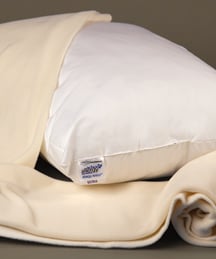
 Allergy pillow cover health benefits stem from reducing nightly exposure to allergens such as dust mites, pet dander, and pollen that commonly accumulate in bedding. Because the face and airways remain in close contact with pillows during sleep, unprotected pillows can significantly impact respiratory health and overall sleep quality.
Allergy pillow covers act as a physical barrier that prevents allergens from penetrating the pillow’s interior. Tightly woven or zippered covers block microscopic particles while still allowing airflow for comfort. By limiting allergen buildup, these covers help reduce symptoms such as congestion, sneezing, itchy eyes, and nighttime coughing.
Improved breathing during sleep supports deeper rest and better immune function. When allergens are minimized, the body experiences fewer inflammatory responses, allowing uninterrupted sleep cycles. Over time, consistent use of an allergy pillow cover may contribute to improved energy levels, clearer breathing, and reduced reliance on allergy medications.
Hygiene and maintenance also play a role in long-term health benefits. Allergy pillow covers are typically removable and washable, making it easier to maintain a cleaner sleep environment. Regular washing in hot water removes surface allergens and prevents accumulation that can otherwise worsen symptoms over time.
While an allergy pillow cover alone cannot eliminate all allergens, combining it with proper mattress protection, air purification, and routine cleaning creates a comprehensive approach to healthier sleep. For allergy sufferers, these small changes can lead to measurable improvements in respiratory comfort, sleep quality, and overall well-being.
At least 10% of the population suffers from an allergy to dust mites, nasty little arachnids that are related to spiders and ticks. These microscopic mites live in pillows, mattresses, blankets, upholstery, and other soft surfaces. They survive on moisture and dead skin cells. The good news is that dust mites do not live on people, but rather near them. The bad news is that they generally live in beds, sustaining themselves on human body moisture and dead skin cells. Depending on its age, a normal mattress may contain between one and ten million dust mites.
It’s not the dust mite itself that causes the allergy symptoms. Rather, the allergy symptoms are caused by a protein that is found in dust mite waste and decomposed body parts; it is this protein that is actually inhaled, not the whole dust mite. While at least 10% of the population suffers from dust mite allergies, a whopping 80% of people with allergies and asthma test positive for dust mites in allergy skin testing. Symptoms of dust mite allergies include congestion, runny nose, itching, sneezing, and watery eyes. If you wake up feeling congested every morning, you’re probably allergic to dust mites.
But don’t panic! You can protect yourself from dust mites with allergy bedding which is the number one solution for reducing allergy symptoms. It’s probably the most inexpensive thing you can do to improve your health and reduce your dust mite allergy symptoms, and it’s also the most effective.
Allergy bedding pillow covers, also known as dust mite encasings, work by creating an allergen-proof barrier between you and your pillow. Some encasings have a membrane backing, a thin layer of urethane which is both allergen-proof and water-proof. This works well as an allergen barrier, but it can be a little uncomfortable to sleep on. We recommend our BedCare pillow covers which are membrane-free, blocking allergens through a revolutionary fabric that is extremely tightly woven, with the smallest average pore size available. Because the pore size of the fabric is so small, dust mites, dust mite allergens, and pet dander cannot get in or out. It’s like putting up an impenetrable wall between you and anything living inside your pillow. The allergy pillow cover can be easily machine-washed and dried, and your decorative pillow case should also be machine-washable and dryable. With allergy relief bedding and a normal laundry schedule, the surface you sleep on at night can be clean and allergen-free.
Of course, dust mite covers aren’t just made for pillows. An allergy relief pillow cover is the quickest fix: it’s the most affordable, and your pillow comes in direct contact with your face, making it the most important surface. But to really protect against dust mite allergens, you’ll want to encase your mattress with a mattress cover as well. If you have a big comforter (especially a down comforter), it should also be encased with a duvet cover, since dust mites can burrow into this material as well.
To take your bedding to the next level, we have also developed the BedCare™ Mite-Proof Pillow. This pillow features a shell that is made from a tightly woven 100% cotton fabric, so finely woven with a mean pore size of 2.6 microns that even the smallest allergens cannot pass through, yet air can, so it is cool and breathable. Mite-Proof Pillow’s 300 thread count, 100% cotton is soft and luxurious to the touch, and its polyester fill adds another layer of softness and comfort. BedCare™ pillows are the soft, comfortable solution to dust mite allergen exposure without the additional cost of an allergen barrier pillow cover.
Being exposed to allergens on an on-going basis can make you feel tired and worn out all the time. Your body is working extra hard to defend itself and expel the allergens. Plus, being congested at night can lead to a poor night’s sleep, weakening your immune system and leaving you feeling exhausted and miserable. Stopping dust mite allergens where they start is an effective and easy way to cut down on allergy symptoms, get a better night’s sleep, and help strengthen your immune system by putting less strain on your body. All this from a simple pillow cover!
To purchase dust mite encasings or find out more, visit our BedCare page.