

Allergy Bedding FAQs
Allergy Bedding FAQs
What are dust mites?
 Allergy bedding FAQs provide valuable information for anyone looking to reduce allergens and improve sleep quality through the right bedding choices. Hypoallergenic sheets, mattress protectors, and bedding materials play a crucial role in minimizing exposure to dust mites, pet dander, mold, and other allergens that can disrupt rest or trigger allergy symptoms.
One common question addressed in allergy bedding FAQs is how to select materials that are truly hypoallergenic. Natural fibers, tightly woven fabrics, and allergy-resistant mattress covers can prevent allergen accumulation and make cleaning easier. Understanding the differences between cotton, bamboo, and synthetic options helps homeowners make informed choices based on comfort, durability, and allergy protection.
Maintenance and care are also key topics in allergy bedding FAQs. Frequent washing in hot water, using allergen-proof pillowcases, and regular mattress vacuuming are simple but effective ways to keep allergens at bay. Following these care routines ensures that bedding continues to provide a healthy sleeping environment over time.
Another important aspect discussed in allergy bedding FAQs is compatibility with different types of sleepers and homes. For example, families with children, pets, or asthma sufferers may require more robust protective measures, while people with sensitive skin benefit from soft, breathable fabrics that do not irritate.
By reviewing allergy bedding FAQs, consumers gain practical advice and insights for creating a healthier sleep environment. These tips help minimize allergen exposure, improve sleep quality, and make daily bedding maintenance easier, allowing for a more comfortable and restful night’s sleep for everyone in the household.
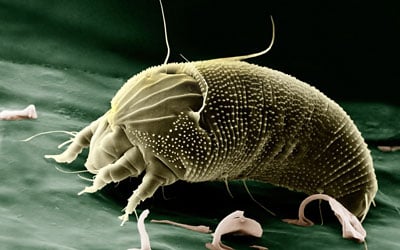
They may look like tiny insects, but these microscopic, eight-legged arachnids are actually related to spiders. farinae, more commonly known as “dust mites,” are too small to be seen with the human eye. They flourish in warm, humid environments, like your bed, where moisture and food is abundant, namely, your body moisture and dead skin cells. With a ready food source and a comfortable home, dust mites are now ready to increase very rapidly. Each egg-laying female can increase the population by 25 or 30 mites a week, and depending on its age, your bed can quickly house between one and ten million dust mites. During its 80-day lifespan, the average dust mite produces around 1,000 allergenic waste particles. Prolific and widespread, there’s little question as to why the dust mite allergen is the number one cause of year-round allergic rhinitis.
How do I know if I have a dust mite problem?
The dust mite allergen can cause a fairly wide variety of symptoms. From sneezing, itchy and watery eyes, nasal congestion, and a runny nose to stuffy ears, respiratory problems, atopic dermatitis, and wheezing (in asthmatics), the symptoms of a reaction to dust mites are mostly mild. Still, they can be serious nuisances that cause restless sleep every single night. Of these symptoms, those with allergies commonly experience morning-time symptoms, including congestion, coughing, a runny nose, or itchy eyes. For asthmatics, symptoms often include a dry cough or wheezing at night. If you suspect you may have a dust mite problem, consult a board-certified allergist or an ENT specialist. They can combine your medical history with your family’s medical history (conditions are often genetic) and sensitivity tests to determine whether or not you are allergic to these tiny creatures.
It’s worth mentioning that you cannot see dust mites. Nor do they bite. If you see insects or are experiencing bites on your skin, it is another insect, but NOT a dust mite.
What is allergy bedding?
Allergy bedding covers, also referred to as dust mite bedding, or dust mite covers are specifically designed to prevent dust mites and other allergens from infesting your bed. The only way to eliminate dust mites or reduce your reactions to them is to cut off their source of food (your dead skin cells) by setting up a barrier between yourself and the dust mites. Allergy bedding encases your entire mattress, pillow, box spring, or comforter, providing the necessary physical barrier. Not only can it keep new mites out, but it seals existing mites in, so even if your mattress is several years old, you can likely benefit from the use of allergy bedding covers. It’s essential to remember that allergy covers are not sheets. A true dust mite cover has a zipper, is constructed from tightly woven fabrics, and completely encompasses your pillow or mattress, including the top, bottom, and sides.
Will allergy bedding cure my allergies?
For both of our sakes, we wish! No, allergy bedding won’t cure your allergies or asthma, nor will it eliminate all your symptoms. Allergy bedding covers are an essential tool and an effective way to help reduce reactions, allowing you to sleep better through the night and wake more rested. With no cure for allergies or asthma, these covers play a crucial role in controlling your indoor environment and limiting exposure to allergens, especially when you are at your most vulnerable, while you sleep. When combined with regular cleaning and dusting, they can make a big difference in how you feel in the morning and how well you sleep at night. While they are not a cure, for hundreds of thousands of people each year, they make a significant difference.
How does allergy bedding help?
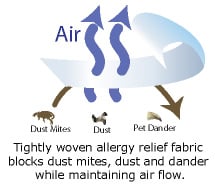 Dust mites and other common household allergens are so tiny that they easily slip through the pores of regular bedding. Fabrics have microscopic (and some not-so-microscopic!) pores or spaces between the individual threads of normal bedding fabrics. They are essentially a sieve, and not a very good one when it comes to allergens. Allergy bedding, on the other hand, is woven much more tightly so that the pores are too small for dust mites and other allergens to penetrate. Cut off from their food supply, dust mites soon die. Sealed away by a cover, existing dust mites and their allergens are trapped in your mattress or pillow, unable to escape into the air you breathe while you sleep at night. Best of all, you can continue to use all your favorite decorative sheets and pillowcases, as dust mite covers serve as a protective layer that sits between the bedding and the sheet or pillowcase. Wash the covers in hot water or dry them on high heat as needed to keep them free of dust mites and remove any allergens that may have settled on top of them.
How large is dust mite allergen?
The dust mite allergen averages around 10 microns in diameter, with dust mites themselves being much larger. One micron is 1/25,000 of an inch. To give you an idea of how small this is, dust mites are approximately 300 microns in size, while a grain of sand can be over 800 microns. Therefore, to effectively block dust mite allergens, the pore size of allergy bedding must be smaller than the allergen, which is approximately 10 microns. BedCare All-Cotton has some of the smallest average pore sizes at 2.8 microns. This fabric provides the ultimate protection against allergens while maintaining a cool, comfortable feel. Best of all, it’s made right here in the USA and comes with a LIFETIME WARRANTY. BedCare™ All-Cotton Allergy Mattress Covers have an average pore size of 2.6 microns, while BedCare™ Organic All-Cotton Allergy Covers have an average pore size of 4.8 microns. All of these fabrics offer effective protection against dust mites. BedCare Classic Allergy Covers and BedCare™ Fitted Hypoallergenic & Waterproof Mattress Covers offer excellent protection as well; instead of small pores, Made from 100% Natural Eucalyptus TENCEL™ their naturally antibacterial & moisture-wicking making them impervious to dust mites as well as water resistant.
Does allergy bedding block out other allergens besides dust mites?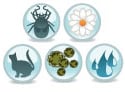 Yes, allergy relief bedding also blocks out other allergens like mold spores and pollen, and with an average pore size of 2.8 microns, BedCare All-Cotton blocks out even the smallest allergens like cat dander. While dust mite allergen averages around 10 microns, pet dander, specifically cat dander, is often smaller than 5 microns. The BedCare™ fitted hypoallergenic mattress cover is also naturally antibacterial and moisture-wicking to help protect against mold, mildew, soiling agents, stains, and deterioration. Look for the icons associated with each fabric type to get a better idea of which fabrics block which common allergens.
What are the advantages of allergy bedding?
Over 50 million people in the United States alone suffer from allergies, and among them, nearly 70% are allergic to dust mites. This is most common with children, but millions of adults also struggle with dust mite allergies. Allergy relief bedding is the first line of defense against allergies. A Johns Hopkins University study showed that “mite population and allergen levels decreased by 90% or more within a month of placing mattress and pillow covers and treating bedding.” If you decrease your exposure to allergens, you will breathe more easily, sleep more soundly, and feel better. It’s that simple! Even if you don’t have allergies, you’ll rest easier knowing that you’re not living in a miniature ecosystem of microorganisms. Lastly, allergy bedding will also protect your mattress and can add years to its lifespan.
What type of fabric is allergy bedding?
This is one of the most common of all allergy bedding FAQs. As consumers become more conscientious about the products they consume and live with every day, the types of fabrics we offer have expanded. Most fundamentally, though, the type of fabric depends on the type of Allergy Armor bedding you need. Our highest-quality choice for allergy-friendly bedding, BedCare™, is made from some of the softest, coolest, and longest-lasting fabrics available. BedCare™ All-Cotton fabric is made from a 100% cotton barrier fabric that is so tightly woven that virtually all allergens and particles can’t pass through, even ones as small as cat dander. BedCare™ Classic fabrics are a stretch-knit polyester with an inner urethane membrane, which makes the fabric somewhat elastic, stretchy, and water-resistant, but slightly louder and warmer for some sleepers. Being water-resistant, however, makes it an excellent option for children. We also offer BedCare Organic Cotton Bedding, a variety that provides the same protection but is made from a certified organic cotton fabric. Refer to our Allergy Bedding Buying Guide for a more detailed explanation of the different fabric types.
Is it warm to sleep on?
Allergy bedding has undergone significant improvements over the years. Twenty-five years ago, all allergy bedding was hot, noisy, and uncomfortable. Today, thanks to technological advances, you can buy allergy bedding that feels just as cool and comfortable as regular sheets. You may still find that cheap allergy bedding, often found in big-box stores, is hot, noisy, and less durable than that purchased from a more specialized company. Other varieties, although softer to the touch, are made from terry fabric with a urethane lining – again, warmer but not long-lasting. Lastly, some covers are still made from plastic. These types, often mass-produced overseas, are usually not even genuine fabric but instead a rubber or plastic substance that can be warm, slippery, or noisy to sleep on. As a general rule of thumb, polyester fabrics are the coolest, followed by cotton, then fabrics with a lining, and finally plastics, vinyls, and rubbers.
How do I clean it?
Caring for allergy relief mattress and pillow covers is simple. Most covers can be machine washed in warm or hot water and gently tumble dried. Others can be wiped with a wet washcloth. Never use bleach. For most people, pillow covers should be washed, at a minimum, every couple of weeks. Mattress covers need to be washed only 3 or 4 times per year, and periodically, the use of a quality HEPA vacuum cleaner to clean the top of the mattress cover can help. Washing frequency can vary significantly from person to person. Traditional bedding (sheets, pillowcases, etc.) should be washed in hot water every one to two weeks. For those with severe allergies, even the covers can be cleaned this frequently.
Which size should I buy?
It is essential to measure the depth of your mattress when ordering allergy bedding. Simply measure your mattress from the bottom to the top, seam to seam. Don’t worry if your mattress is thicker in the middle, as our fabrics are cut to accommodate center bulges or the unevenness that can come with older mattresses. In most fabrics, the sizes we have available are 9″, 12″, 15″, and 18″ deep, for mattresses 9″ deep and smaller. For mattresses 9 “deep and smaller, order 9” encasings. If there is extra fabric left over, it can be easily tucked between the mattress and box spring. Since we manufacture the majority of the bedding covers we offer, custom sizes are also available.
What about an allergy cover for my box spring or comforter?
Box springs can be encased to keep dust mites and other allergens from penetrating your mattress. Many people skip the box spring cover, and for those with light or even moderate allergies, this is often fine. However, those with the most severe allergies or asthma will want to take this extra step. To make the process easier, we offer bedding packages that include your choice of mattress cover, two standard pillow covers, and a box spring cover. These encasings work synergistically with mattress encasings to provide maximum protection. Allergy relief comforters and duvet covers mean you don’t have to throw out your old comforter and purchase a new one. Simply shield your old comforter with an encasing, and if you like, you can cover the encasing with a decorative duvet cover. Again, these covers act as that barrier layer between the bedding and the decorative cover, so each comes with loops and strings to secure the allergy duvet cover to the duvet and the decorative cover.
How do the covers work with a mattress pad?
Many people use a mattress pad for additional softness or support. When evaluating the effectiveness of your mattress cover, several key factors should be taken into consideration. Ideally, you would want the mattress pad to sit on top of the mattress, and then both pieces to be covered by the mattress cover. Sometimes, though, this isn’t possible. All is not lost, though. Some mattress pads are naturally resistant to dust mites, such as those made from natural rubber, latex, and memory foam. For mattress pads made of these materials, dust mites generally have a more difficult time penetrating the material and establishing a home for themselves. While it’s always ideal to have the mattress pad covered by the mattress cover, with certain types, it’s not a critical requirement.
When should I replace my mattress?
We recommend replacing your mattress every 10 years, at the very least. When you replace your mattress, we recommend that you switch to a hypoallergenic mattress. Generally, those made from latex, rubber, or memory foam are less hospitable to dust mites. In the meantime, you can increase the lifespan of your current mattress by using a dust mite cover. Since you spend about a third of your life sleeping, shouldn’t you have bedding that lets you sleep comfortably and allergy-free?
Why doesn’t everybody have allergy bedding?
Most people, even asthmatics and allergy sufferers who are the most severely affected groups, are unaware of the proliferation of allergens in their bedrooms. They do not realize that they shed 2-3 pounds of skin per year, while spending about a third of that year in bed; therefore, they deposit about a pound of skin directly into their mattress. All of that dead skin feeds the growing dust mite population living in their bed. After 10 years, the weight of the average mattress can double due to dust mite infestation, body moisture, and dead skin cells.
Many people may wake up sneezing in the morning, or with congestion, needing to blow their nose a couple of times first thing, or experiencing other symptoms that don’t seem to connect the dots. We are all creatures of habit, and when things like morning symptoms become normalized —if they are not too severe —we simply accept them for what they are. Unfortunately, we sometimes fail to ask ourselves if things could be better.
Lastly, perceptions of old allergy bedding die hard. While you can indeed find products that are cheap and very much akin to the plastic-like covers of yesteryear, modern allergy bedding isn’t loud, uncomfortable, or hot to sleep on. Still, for many, the old stereotypes persist. Modern allergy bedding offers enhanced protection from allergens, and it is so comfortable that most people can’t even tell it’s been installed on their mattress.
Where can I buy allergy bedding?
AchooAllergy.com specializes in allergy bedding! You can purchase dust mite covers right here on our website.
Am I forgetting anything?
Environmental control and allergy relief aren’t one-size-fits-all solutions. Different things work for different people, but the fact remains that allergen avoidance remains the most advised solution to dealing with allergies and asthma. Allergy bedding covers remain one of the easiest and most effective ways to reduce allergens in the place you need them the most – the bedroom. Beyond the answers outlined to these allergy bedding FAQs, there are other things that can help.
Indoor air quality is a growing concern, but you can remove allergens from your home’s air with a HEPA air purifier. Vacuum cleaners with HEPA filters can remove allergens from your carpet and upholstery, and dehumidifiers also play an important role inmaking your home allergen-free. AchooAllergy.com also sells a wide variety of cleaning products specifically designed to eliminate dust mites and other allergens.
Now that you’ve read through the Allergy Bedding FAQs, if you’re ready to shop allergy bedding. If you found these dehumidifier FAQs helpful and want to learn more about dehumidifiers, humidity, or controlling excess moisture, visit any of these Learning Center resources.
✔ Allergy Bedding Buying Guide
✔ Compare Allergy Bedding
✔ How to Install Your Mattress Cover
✔ How to Care For Your Allergy Bedding