

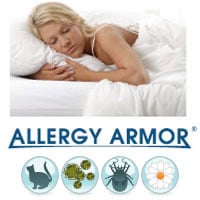
 1. Cover your bedding with allergy bedding. Exclusive to AchooAllergy.com, Allergy Armor fabrics zip up to form a barrier that will protect you from dust mites and other allergens. Strong as armor and soft as silk, these seven breathable fabrics are your first line of defense for your pillows and mattresses, putting a physical barrier between dust mites and their food source, and you can also browse mattress collection options to find the perfect match for your allergy-friendly setup..
Starve the mites! Then fortify your bedroom with Allergy Armor allergy pillows, organic cotton blankets, hypoallergenic comforters, and all-natural, certified organic sheets. For all bedding, maintain a dust mite and allergen-free environment by washing bedding with de-mite Laundry Additive or Allersearch Allergen Wash. No matter your allergies or sensitivities, choose the bedding you know will deliver a restful night’s sleep.
2. Launder Bedding Frequently – A big step in preventing the spread of allergens and dust mites is frequent washes. The AAFA recommends washing bedding in hot water weekly. Some bedding may not be able to withstand frequent washes or hot water. In this case, an alternative is the use of an Anti-Allergen Laundry Detergent and or an Anti-Allergen Laundry Additive. Don’t forget to also wash Mattress Pads and Duvet Covers, as well as Sheets, Blankets, and Mattress Covers. All bedding that is not inside a protective allergen cover or zippered encasement needs to be washed to remove allergens fully. Things you don’t want to wash weekly, like a mattress topper, should be placed inside a protective encasement. There are various size encasements available for just this reason. Lastly, wash the rest of the soft fabric furnishings like curtains, bed skirts, and area rugs every 7-14 days.
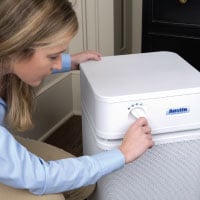 3. Purify the Air. One cubic foot of air in your home can literally hold millions of fine particles, including allergens like dust mite feces, mold spores, pollen, chemical vapors, and odor molecules. One of the easiest ways to improve your indoor air quality is to find the air purifier that’s right for you. Using our detailed Air Purifier Buying Guide to select the air filter type and air purifier style that can best meet your filtration needs.
To control populations of dust mites and mold, monitor the humidity with a hygrometer and keep your relative humidity low with a dehumidifier. In homes with dry winter air, a humidifier will provide sinus relief while preventing more dust particles from becoming airborne. An additional way to improve your IAQ (indoor air quality) is by using 3M Furnace/HVAC Filters, Web Vent Filters, and Window Filters.
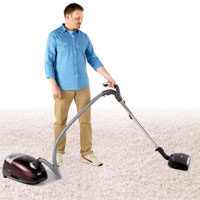 3. Clean the Carpet. Since the 1950s, the wall-to-wall carpet was something every American family strived to attain. Not until decades later was the link between allergies, asthma, and MCS to carpet revealed. Dust mites live deep within carpet fibers, and allergens of all sorts embed themselves and attach to the carpet. More recently, the glues and adhesives used in modern carpet production have been linked to chemical sensitivities.
To clean carpets, the vacuum cleaner has been a staple in nearly every household, but traditional vacuum cleaners only clean for appearances. So while they can clean up dirt, they leave behind allergens. Worse still, as tiny particles of dust mites, mold spores, and pollen are pulled from the carpet, substandard filtration allows those same particles to be spewed throughout the home and back into the air you breathe. To ensure that your carpets and rugs are cleaned thoroughly, you may seek professional carpet cleaning services.
Sealed system, HEPA vacuum cleaners not only improve the appearance of your carpet by cleaning the mess you can see, but they also effectively trap allergens and thus work to improve your allergies instead of worsening them. For extra carpet cleaning power, consider using safe, non-toxic cleaning agents that actually take cleaning a step further by denaturing protein allergens. Sprays and powders like DustMiteX and Allersearch X-Mite neutralize allergens safely and effectively. Alternatively, you may hire a Carlsbad carpet cleaning company to ensure that your carpets are cleaned thoroughly.
4. Control & Regulate Humidity Levels – To help prevent allergies it’s important to create an inhospitable environment for them. Most allergens thrive in either very high or very low humidity conditions. This is why keeping your bedroom or space between 40% and 50% relative humidity is essential. The use of a Humidity Gauge will help monitoring and maintain humidity easier. In the more humid summer months, it may be prudent to invest and use a Dehumidifier, while in the dryer winter months, a Humidifier would be more beneficial. In addition to keeping allergies in check, controlled humidity levels help relieve allergies, cold, flu, and dry weather symptoms. It also helps relieve dry skin, sore throats, irritated sinuses, and coughing. However, there may be situations where mold and mildew growth have already occurred. In that case, Vital-Oxide and NAS-12 mold removers work well. Afterwards, you can follow up with No More Mildew Coating to prevent future growth.
Return to the Allergy Relief Learning Center