Food Allergy and Food Intolerance
A food intolerance is a digestive system response, whereas a food allergy is an immune system response. Although some symptoms of both food allergies and food intolerances are the same (primarily gastrointestinal symptoms such as nausea, stomach pain, and diarrhea), others are unique to either food intolerances or food allergies. Most notably, anaphylaxis, which can lead to death, is a possible repercussion of a food allergy. This is why it's important for food allergic individuals to always carry an Epi-Pen with them. This can provide emergency treatment in case of accidental exposure, buying precious time until professional treatment is obtained. The
Protectube,
Ana-Tote, and
Ana-Tote Twin help food allergic individuals to keep their Epi-Pens safely with them.
Food Allergy Testing
Food allergy testing in the doctor's office involves either a prick skin test or a blood test. In a prick skin test, the doctor will place small drops of the substance being tested on the patient's skin. If the patient is allergic, a mosquito bite-looking bump will form. A blood test checks whether the patient has IgE antibodies to specific foods, indicating an allergy.
MyAllergyTest allows you to take conduct an at-home test for ten allergens, including milk, egg whites, and wheat. The
ALCAT Food Sensitivity Home Kit similarly allows you to test for hidden food allergies from the comfort of your home. It's important to note that you should be cautious about self-diagnosis of any food allergies. You could end up unnecessarily eliminating a food that provides much-needed nutrition, for instance. Be sure to discuss your food allergy concerns and a history of symptoms with an allergist. Information gathered from your personal history with the food as well as the information from the food allergy testing will be taken into account in order to make an accurate diagnosis.
Children and Food Allergies
The American Academy of Allergy, Asthma & Immunology reports that about 2.2 million school-aged children have food allergies. One in every 17 children under three has a food allergy.
Food allergies in young children are particularly frightening. School, friends' birthday parties, and sleepovers all pose extra hazards to the food allergic child. Much of parents' anxiety is related to questions about whether their children will be able to effectively communicate their food allergy.
Food allergy t-shirts can help by visibly reminding caregivers of the child's allergy. Another source of concern is eating out with food allergic children, largely because of possible cross-contamination.
Table Toppers Disposable Place Mats can help prevent cross-contamination from food residues left on tabletops, and
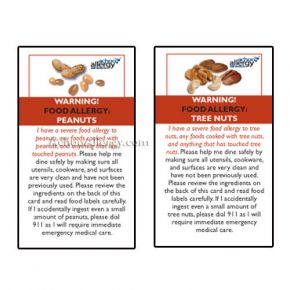
Food Allergy Restaurant Cards are great for both children and adults who have food allergies, helping to communicate food allergies with servers and restaurant staff.
Food Allergy Anaphylaxis
A severe allergic reaction, anaphylaxis occurs rapidly and may cause death. Food is one of the most common causes for onset of
anaphylaxis, and accounts for about 30,000 emergency room visits every year in the United States. Those who have food allergies as well as asthma may be at even greater risk for experiencing anaphylactic reactions to food. Indicators of anaphylaxis include swollen lips or skin symptoms, difficulty breathing, reduced blood pressure, exposure to a suspected allergen, and gastrointestinal symptoms. An actual anaphylactic reaction might begin with a tingling feeling, a metallic taste in the mouth, itching, swelling of the mouth and throat area, gastrointestinal symptoms, drop in blood pressure, a sensation of warmth, difficulty breathing, or loss of consciousness. Epinephrine injections are life-saving treatments of anaphylaxis. They counteract severe low blood pressure and wheezing by narrowing the blood vessels and opening airways in the lungs. Food allergic individuals should always carry an Epi-Pen with them. The Protectube and Ana-Tote carrying cases help facilitate this.
Food Allergy Action Plan
Individuals with food allergies should have a well thought-out plan to cope with their - or their children's - food allergies. This includes ways to minimize and prevent exposure to the food allergen, as well as a plan of action for what to do if a reaction occurs.
Food Allergy Cards are a wonderful way to make sure your server and restaurant staff are aware of the danger your food allergy poses and help them to ensure you aren't exposed to the food you or your child is allergic to. In addition, Epi-Pens are an
indispensable component of any food allergy action plan. Carrying cases can help ensure that you always have a well-protected Epi-Pen with you or your child. The
Food Allergy & Anaphylaxis Network (FAAN) provides a printable Food Allergy Action Plan for students to take with them to school.
|